

Introduction
The importance of preschool education has become a widely discussed topic among parents, educators, and child development experts. The early years, especially between the ages of 2 and 6, are a critical period for brain development, emotional growth, and skill building. During this stage, children absorb information quickly, making it the ideal time to introduce them to a nurturing and stimulating early childhood education environment that encourages exploration, creativity, and confidence.
Today, more parents recognize the benefits of preschool education beyond basic academics. A quality preschool helps children develop essential cognitive, language, social, emotional, and physical skills through structured, play-based learning. It also fosters independence, curiosity, problem-solving abilities, and positive interactions with peers and teachers. These experiences create a strong foundation for lifelong learning and overall development.
Understanding why preschool is important goes beyond preparing children for kindergarten. Preschool introduces young learners to routines, classroom behavior, communication skills, teamwork, and self-confidence while nurturing a genuine love for learning. These early experiences make the transition to formal schooling smoother and help children adapt more easily to new environments and challenges.
The importance of early childhood education lies in its lasting impact on a child’s academic success and personal growth. Research consistently shows that children who attend high-quality preschool programs are better prepared for school, perform well academically, and develop stronger social and emotional skills than those without access to structured early learning opportunities.
In this comprehensive guide, we’ll explore the importance of preschool education, discuss the benefits of preschool education, explain why preschool is important, and highlight the importance of early childhood education in shaping confident, capable, and lifelong learners. Whether you’re a first-time parent or exploring preschool options for your child, this guide will help you make an informed decision about your child’s early learning journey.
What Is Preschool Education?
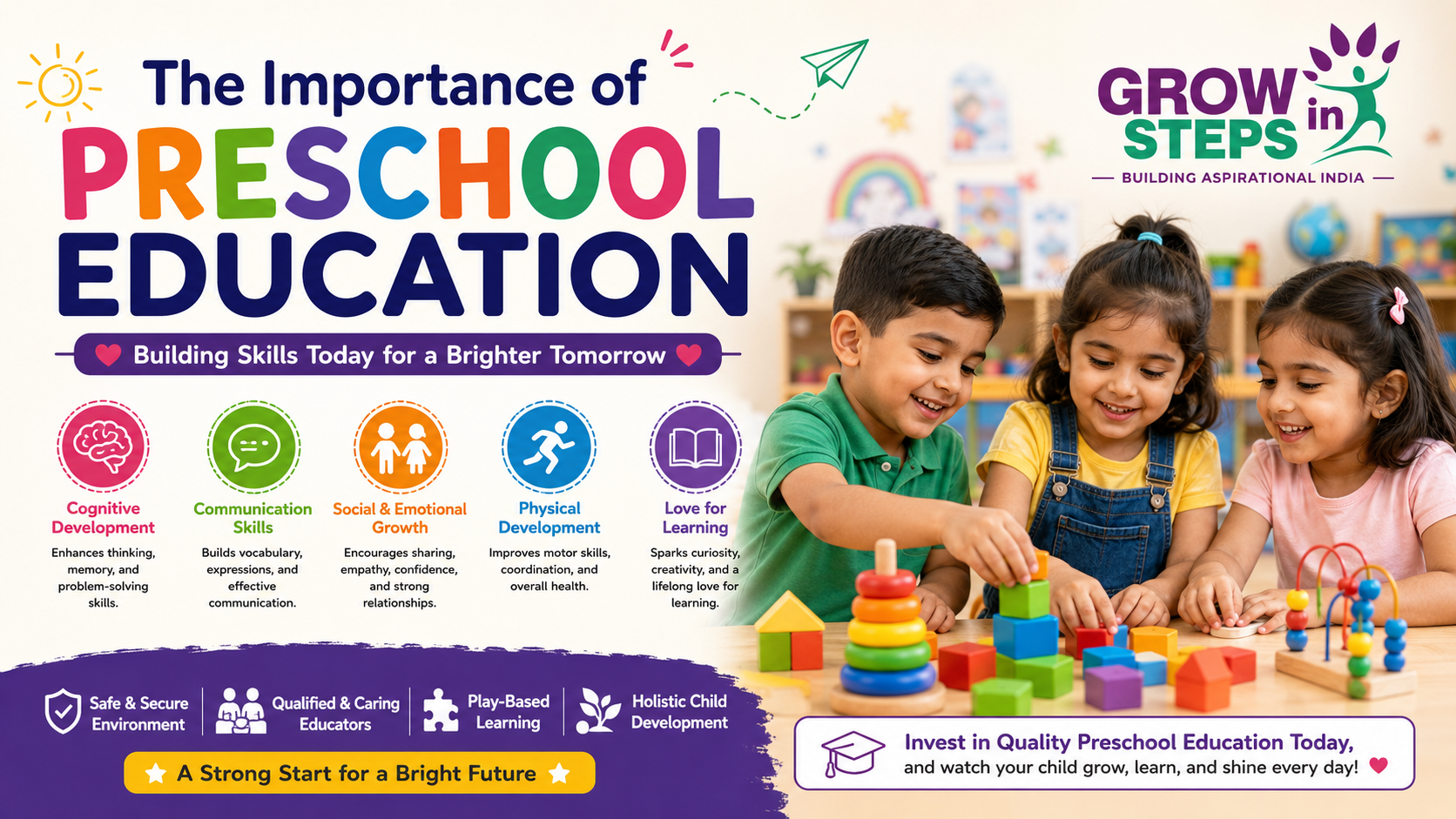
Preschool education is the first step in a child’s formal learning journey, designed to nurture young minds during their most important developmental years. It provides a structured yet enjoyable environment where children learn through play, exploration, and hands-on experiences. Rather than focusing solely on academics, preschool emphasizes the development of cognitive, social, emotional, language, and physical skills that form the foundation for lifelong learning.
High-quality preschool programs encourage children to become curious, independent, and confident learners while helping them develop essential life skills such as communication, teamwork, problem-solving, and self-expression. By participating in age-appropriate activities, children gradually build the confidence and readiness needed to transition smoothly into primary school.
Definition of Preschool Education
Preschool education refers to organized early childhood learning programs designed for children between 2 and 6 years of age, before they begin formal elementary education. During these formative years, children learn best through interactive activities, storytelling, music, art, outdoor play, and guided exploration.
Unlike traditional classroom teaching, preschool uses a play-based learning approach, allowing children to develop academic readiness while enjoying meaningful experiences. Teachers create a safe, engaging, and supportive environment where children can explore new ideas, ask questions, and develop essential skills at their own pace.
Although the terms daycare, playgroup, nursery, and kindergarten are often used interchangeably, they serve different purposes in a child’s early learning journey.
| Program |
Typical Age Group |
Primary Focus |
| Daycare | 6 months–6 years | Childcare, supervision, daily routines, meals, and basic learning activities for working families. |
| Playgroup | 2–3 years | Introduction to group learning through play, music, storytelling, sensory activities, and social interaction. |
| Nursery | 3–4 years | Early academic concepts, language development, creativity, and social skills in a structured classroom environment. |
| Kindergarten (LKG/UKG) | 4–6 years | School readiness with a stronger focus on literacy, numeracy, communication, and independent learning before primary school. |
Each stage builds on the previous one, ensuring children develop the knowledge, skills, and confidence needed for future academic success.
Objectives of Preschool Education
The primary goal of preschool education is to support a child’s holistic development by creating meaningful learning experiences that promote intellectual, emotional, social, and physical growth.
Learning Through Play
Play is the heart of preschool education. Through games, puzzles, storytelling, music, art, role-playing, and outdoor activities, children develop creativity, curiosity, critical thinking, and problem-solving skills. Play-based learning makes education enjoyable while helping children understand new concepts naturally.
Building Confidence
Preschool encourages children to become more independent by allowing them to make choices, complete simple tasks, communicate their ideas, and interact with peers. As children achieve small milestones, they develop self-confidence, resilience, and a positive attitude toward learning.
Preparing Children for Formal Schooling
One of the key objectives of preschool is to ensure children are ready for primary school. They learn to follow routines, listen to instructions, participate in group activities, manage simple responsibilities, and develop early literacy and numeracy skills. These experiences help children transition smoothly into formal education with greater confidence and enthusiasm.
Why Is Preschool Education Important?
The importance of preschool education extends far beyond preparing children for their first day of school. During the early years, children develop the foundational skills they need to succeed academically, socially, emotionally, and physically. A high-quality preschool provides a safe, engaging, and stimulating environment where children learn through play, exploration, and meaningful interactions. These experiences help build confidence, encourage curiosity, and lay the groundwork for lifelong learning.
Supports Early Brain Development
The first five years of a child’s life are a period of extraordinary brain development. During this time, millions of neural connections are formed every second, creating the foundation for learning, memory, language, and emotional regulation. Providing children with enriching experiences during these years has a lasting impact on their overall development.
A quality preschool offers a stimulating learning environment filled with stories, music, art, puzzles, sensory activities, and interactive play. These experiences encourage children to explore, ask questions, solve problems, and think creatively, strengthening the neural pathways that support future academic success. The combination of guided learning and play helps children develop curiosity and a lifelong love for learning.
Builds Strong Social Skills
One of the greatest benefits of preschool education is helping children develop strong social skills. For many children, preschool is their first opportunity to interact regularly with peers outside the family, making it an ideal setting to learn how to communicate, cooperate, and build positive relationships.
In preschool, children learn to:
- Share toys and learning materials with others.
- Work together during group activities and games.
- Respect different opinions, cultures, and personalities.
- Practice kindness, patience, and empathy toward others.
These early social experiences teach children how to navigate group settings, resolve conflicts peacefully, and become confident members of a community.
Enhances Communication Skills
Effective communication is a critical life skill, and preschool plays a major role in developing it. Through daily conversations, storytelling, songs, rhymes, and interactive classroom activities, children expand their vocabulary and improve both verbal and non-verbal communication.
Preschool helps children:
- Improve listening and comprehension skills.
- Express thoughts, ideas, and feelings with confidence.
- Participate in storytelling, discussions, and role-play.
- Develop clear pronunciation and sentence formation.
Strong communication skills not only support academic success but also help children build meaningful relationships and express themselves confidently in different situations.
Encourages Emotional Development
Learning to understand and manage emotions is an essential part of early childhood. Preschool provides a nurturing environment where children feel safe, supported, and encouraged to express their emotions in healthy ways.
Children gradually learn to:
- Recognize and manage emotions such as happiness, frustration, excitement, and disappointment.
- Build self-confidence by completing age-appropriate tasks independently.
- Develop resilience by overcoming small challenges and trying new activities.
- Become more independent in everyday routines.
- Feel secure through positive relationships with teachers and classmates.
These experiences strengthen emotional well-being and help children develop the confidence needed to adapt to new situations and future learning environments.
Develops Cognitive Skills
Preschool introduces children to activities that strengthen thinking, reasoning, and problem-solving abilities. Instead of memorizing information, children learn by exploring, experimenting, and discovering solutions through play-based learning.
Daily preschool activities help children develop:
- Problem-solving skills through puzzles and hands-on tasks.
- Critical thinking by asking questions and exploring different ideas.
- Creativity through art, music, imaginative play, and storytelling.
- Memory and concentration through games, routines, and interactive learning.
- Early reasoning and decision-making skills during structured activities.
These cognitive skills prepare children for future academic learning while encouraging curiosity and independent thinking.
Improves Physical Development
Physical development is another important reason why preschool is important. Young children need regular opportunities to move, play, and strengthen their growing bodies. A balanced preschool program includes both indoor and outdoor activities that promote healthy physical development.
Preschool supports physical growth by helping children develop:
- Gross motor skills through running, jumping, climbing, balancing, and outdoor games.
- Fine motor skills through drawing, coloring, cutting, threading beads, and building blocks.
- Hand-eye coordination through puzzles, ball games, crafts, and writing readiness activities.
- Healthy habits through active play, movement, and structured physical activities.
These experiences improve coordination, balance, strength, and overall physical fitness while helping children gain confidence in their abilities.
By supporting brain development, strengthening social and communication skills, nurturing emotional well-being, enhancing cognitive abilities, and promoting physical growth, preschool provides children with a strong foundation for lifelong success. These early experiences demonstrate the true importance of preschool education and highlight why preschool is important for every child’s overall development.
Academic Benefits of Preschool Education
Early Literacy Skills
- Letter recognition
- Phonics readiness
- Story comprehension
Early Numeracy Skills
- Counting
- Shapes
- Colors
- Number recognition
- Simple math concepts
School Readiness
- Following routines
- Classroom behavior
- Attention span
- Learning discipline
Social and Emotional Benefits of Preschool
One of the greatest benefits of preschool education is its positive impact on a child’s social and emotional development. While academic learning is important, preschool also teaches children how to interact with others, express their emotions, solve conflicts, and develop self-confidence. These essential life skills help children build healthy relationships and prepare them for success both inside and outside the classroom.
A nurturing preschool environment encourages children to collaborate, communicate, and become independent while learning valuable social values such as kindness, respect, empathy, and responsibility.
Learning Cooperation
Preschool introduces children to group activities where they learn the importance of working together. Whether they’re building blocks, completing art projects, or participating in classroom games, children discover how teamwork leads to better outcomes.
Through these experiences, children learn to:
- Share toys and learning materials.
- Take turns during activities and games.
- Listen to others’ ideas and opinions.
- Work together to achieve common goals.
- Resolve minor conflicts respectfully.
These cooperative experiences help children become more patient, understanding, and supportive of others.
Building Friendships
For many children, preschool is their first opportunity to build friendships outside their family. Daily interactions with classmates help children develop trust, communication skills, and emotional connections.
Children learn how to:
- Introduce themselves and make new friends.
- Communicate politely with peers.
- Respect differences in personalities and backgrounds.
- Show kindness, empathy, and compassion.
- Develop a sense of belonging within a group.
Strong friendships create a positive learning environment and contribute to a child’s emotional well-being and happiness.
Developing Leadership Skills
Preschool provides numerous opportunities for children to take initiative and develop leadership qualities. Simple classroom responsibilities and group activities encourage children to become more confident decision-makers.
Leadership skills are nurtured by encouraging children to:
- Lead classroom activities or games.
- Help classmates complete tasks.
- Volunteer for small responsibilities.
- Make independent choices during learning activities.
- Express ideas confidently during discussions.
These experiences build responsibility, communication, and decision-making skills that continue to benefit children throughout their education.
Improving Confidence
Confidence develops when children feel safe, supported, and encouraged to try new things. Preschool creates an environment where every achievement, no matter how small, is celebrated, helping children believe in their abilities.
Children gain confidence by:
- Completing age-appropriate tasks independently.
- Participating in storytelling, singing, and classroom discussions.
- Exploring new activities without fear of failure.
- Receiving positive encouragement from teachers.
- Solving simple challenges through play and exploration.
Confident children are more willing to ask questions, participate in class, and embrace new learning opportunities.
Learning Responsibility
Preschool teaches children that responsibility begins with small, everyday actions. Classroom routines help children understand the importance of caring for themselves, their belongings, and their environment.
Children gradually learn to:
- Put away toys after playtime.
- Organize their learning materials.
- Follow classroom rules and routines.
- Complete simple assigned tasks.
- Respect shared spaces and classroom property.
These early lessons in responsibility foster independence, self-discipline, and accountability, preparing children for the expectations of primary school and everyday life.
Building a Strong Foundation for Life
The social and emotional skills developed during preschool are just as valuable as academic knowledge. By learning cooperation, forming friendships, developing leadership abilities, building confidence, and taking responsibility, children become emotionally resilient and socially capable individuals. These lifelong skills highlight the importance of preschool education and demonstrate how a quality early childhood education program helps children grow into confident, compassionate, and successful learners.
Importance of Play-Based Learning in Preschool
Instead of relying solely on traditional classroom instruction, preschool encourages children to discover new concepts by playing, experimenting, asking questions, and interacting with their environment. This approach makes learning enjoyable while supporting cognitive, social, emotional, language, and physical development.
One of the key benefits of preschool education is that it transforms everyday activities into valuable learning opportunities. Through guided play, children develop problem-solving skills, creativity, communication, and confidence while building a lifelong love for learning.
Learning Through Exploration
Young children are naturally curious, and preschool nurtures that curiosity by encouraging them to explore the world around them. Teachers provide hands-on activities that allow children to observe, experiment, and discover new ideas at their own pace.
Exploration-based learning helps children:
- Develop critical thinking and problem-solving skills.
- Ask questions and seek answers independently.
- Improve observation and reasoning abilities.
- Build confidence by trying new experiences.
- Develop curiosity and a positive attitude toward learning.
This active approach helps children understand concepts more effectively than passive learning alone.
Creative Activities
Creative expression plays a vital role in a child’s overall development. Preschool offers a variety of activities that encourage children to think imaginatively while expressing their ideas and emotions.
Creative activities include:
- Drawing and coloring
- Painting and craft projects
- Building with blocks
- Clay modeling
- Simple science experiments
- Puzzle-solving and construction games
These activities strengthen fine motor skills, improve concentration, encourage innovation, and help children develop confidence in their creative abilities.
Music, Dance, and Art
Music, dance, and art are essential parts of a well-rounded preschool curriculum. These activities make learning enjoyable while supporting emotional, cognitive, and physical development.
Through music, dance, and art, children:
- Improve language and listening skills through songs and rhymes.
- Develop rhythm, balance, and coordination through movement.
- Express emotions creatively through drawing, painting, and crafts.
- Enhance memory and concentration by learning songs and patterns.
- Build self-confidence by participating in performances and group activities.
These creative experiences encourage self-expression and make learning more engaging and memorable.
Outdoor Learning
Outdoor play is an important component of preschool education because it promotes both physical health and experiential learning. Spending time outdoors allows children to explore nature, develop motor skills, and build social relationships while staying active.
Outdoor learning activities help children:
- Strengthen gross motor skills through running, jumping, climbing, and balancing.
- Improve coordination and physical fitness.
- Develop teamwork through group games.
- Learn about nature, plants, insects, and the environment.
- Reduce stress while encouraging active, healthy lifestyles.
Outdoor experiences also foster curiosity and help children connect classroom learning with the world around them.
Role Play and Imagination
Pretend play is one of the most powerful ways young children learn. By acting out real-life situations and imaginary scenarios, children develop language, creativity, empathy, and social skills.
Role-play activities may include pretending to be:
- Doctors and nurses
- Teachers and students
- Shopkeepers and customers
- Chefs and restaurant staff
- Firefighters, police officers, or community helpers
These activities help children:
- Develop communication and storytelling skills.
- Improve problem-solving and decision-making abilities.
- Understand different roles and responsibilities in society.
- Build empathy by seeing situations from another person’s perspective.
- Strengthen confidence and independent thinking.
Why Play-Based Learning Matters
Play-based learning is at the heart of quality preschool education because it combines fun with meaningful learning experiences. It helps children explore new ideas, express themselves creatively, develop essential life skills, and build confidence in a supportive environment. This child-centered approach highlights the importance of preschool education by ensuring children are not only prepared for academic success but also equipped with the curiosity, resilience, and social skills they need to thrive throughout life.
How Preschool Supports Overall Child Development
The importance of preschool education lies in its ability to nurture every aspect of a child’s growth—not just academic learning. A quality preschool focuses on holistic child development, helping children build the knowledge, skills, and confidence they need for future success. Through play-based activities, interactive lessons, and positive social experiences, preschool supports children’s cognitive, language, physical, social, and emotional development during their most formative years.
By creating a safe and stimulating learning environment, preschool enables children to reach important developmental milestones while fostering a lifelong love for learning.
Cognitive Development
Cognitive development refers to a child’s ability to think, learn, remember, reason, and solve problems. Preschool provides numerous opportunities for children to develop these skills through hands-on exploration and age-appropriate learning activities.
Children strengthen their cognitive abilities by:
- Solving puzzles and matching games.
- Exploring shapes, colors, numbers, and patterns.
- Participating in science and sensory activities.
- Asking questions and discovering new concepts.
- Developing memory and concentration through interactive games.
These experiences improve critical thinking, creativity, and decision-making skills, preparing children for future academic learning.
Language Development
Language development is one of the most significant benefits of preschool education. Regular interaction with teachers and classmates helps children improve both their speaking and listening abilities while expanding their vocabulary.
Preschool supports language development through:
- Storytelling and picture books.
- Rhymes, songs, and phonics activities.
- Classroom discussions and group conversations.
- Show-and-tell sessions.
- Vocabulary-building games and language-rich activities.
As children become more confident communicators, they learn to express their thoughts, ask questions, follow instructions, and participate actively in classroom activities.
Physical Development
Daily movement and play help children become stronger, healthier, and more coordinated.
Preschool encourages physical development through:
- Running, jumping, climbing, and balancing activities.
- Outdoor games and sports.
- Drawing, coloring, painting, and craft projects.
- Building blocks and puzzle activities.
- Cutting, folding, and threading exercises.
These activities strengthen muscles, improve hand-eye coordination, enhance balance, and prepare children for writing and other classroom tasks.
Social Development
Preschool gives children valuable opportunities to interact with peers in a structured environment. These daily interactions help them develop essential social skills that will benefit them throughout life.
Children learn to:
- Share and cooperate during group activities.
- Take turns and practice patience.
- Make friends and build positive relationships.
- Respect different opinions and backgrounds.
- Resolve conflicts peacefully through communication.
These experiences teach children how to work effectively with others and become confident members of a community.
Emotional Development
Emotional development is equally important in helping children grow into resilient and self-confident individuals. Preschool provides a supportive environment where children learn to recognize, express, and manage their emotions in healthy ways.
Children develop emotional skills by:
- Building self-confidence through positive encouragement.
- Becoming more independent in daily routines.
- Learning resilience when facing new challenges.
- Understanding empathy and kindness toward others.
- Developing self-control and emotional regulation.
Supportive teachers and positive classroom experiences help children feel secure, valued, and motivated to explore new learning opportunities.
Building a Strong Foundation for the Future
Quality preschool education supports every area of a child’s development, ensuring they grow intellectually, physically, socially, emotionally, and linguistically. By nurturing these essential skills during the early years, preschool prepares children not only for academic success but also for lifelong learning and personal growth. This holistic approach demonstrates the true importance of preschool education and highlights why investing in early childhood education gives children the strongest possible start in life.
Long-Term Benefits of Preschool Education
The impact of quality preschool extends far beyond the early years. While children gain essential skills during their time in preschool, the knowledge, habits, and confidence they develop continue to benefit them throughout their academic journey and into adulthood. The importance of preschool education lies in its ability to create a strong foundation for lifelong success by nurturing a child’s intellectual, social, emotional, and personal development.
Research has consistently shown that children who participate in quality early childhood education programs are more likely to perform well in school, develop stronger social relationships, and become confident, independent learners. These lasting outcomes highlight the many benefits of preschool education and explain why preschool is important for every child’s future.
Better Academic Performance
Children who attend preschool enter primary school with a solid understanding of basic concepts such as letters, numbers, colors, shapes, and patterns. They are also familiar with classroom routines, making the transition to formal education much smoother.
Preschool helps children:
- Develop early literacy and numeracy skills.
- Improve concentration and attention span.
- Follow instructions and classroom routines.
- Build a positive attitude toward learning.
- Adapt more easily to structured school environments.
These early advantages often lead to stronger academic performance throughout elementary school and beyond.
Improved Communication Skills
Strong communication skills are essential for success in education, relationships, and future careers. Preschool provides children with daily opportunities to interact with teachers and classmates, helping them become confident communicators.
Over time, children learn to:
- Express their thoughts and ideas clearly.
- Expand their vocabulary through conversations and storytelling.
- Listen attentively and follow directions.
- Ask questions with confidence.
Effective communication enables children to build meaningful relationships and succeed in both academic and social settings.
Greater Independence
Preschool encourages children to become more self-reliant by giving them opportunities to make decisions and complete everyday tasks independently. Learning to manage simple responsibilities builds confidence and prepares children for future challenges.
Children develop independence by:
- Managing personal belongings.
- Completing age-appropriate tasks without constant assistance.
- Making choices during learning activities.
- Following daily routines independently.
- Taking responsibility for their actions.
These experiences foster self-confidence, resilience, and a sense of responsibility that continues to benefit children throughout life.
Stronger Problem-Solving Abilities
Problem-solving is an essential life skill that begins developing in the preschool years. Through play-based learning, puzzles, building activities, and group projects, children learn how to think critically, explore different solutions, and make informed decisions.
Preschool helps children:
- Analyze simple situations and find solutions.
- Think creatively when facing challenges.
- Develop logical reasoning skills.
- Learn through trial and error.
- Build confidence in making decisions independently.
These cognitive skills support academic achievement while preparing children to navigate everyday situations with confidence.
Lifelong Love for Learning
Perhaps the greatest gift preschool offers is fostering a lifelong passion for learning. A positive and engaging early learning experience helps children associate education with curiosity, creativity, and enjoyment rather than pressure or fear.
Through supportive teachers, hands-on activities, and play-based exploration, children develop:
- Curiosity about the world around them.
- Enthusiasm for discovering new ideas.
- Confidence to ask questions and explore.
- A growth mindset that embraces learning from mistakes.
- Motivation to continue learning throughout life.
Children who enjoy learning from an early age are more likely to remain engaged in school, pursue new opportunities, and adapt successfully to future challenges.
A Strong Foundation for Lifelong Success
The long-term benefits of preschool education extend well beyond the classroom. By promoting better academic performance, stronger communication skills, greater independence, effective problem-solving abilities, and a lifelong love for learning, preschool equips children with the tools they need to thrive in every stage of life. This lasting impact demonstrates the true importance of preschool education and reinforces the importance of early childhood education in shaping confident, capable, and successful individuals.
Role of Parents in Preschool Education
While preschool provides children with a strong foundation for learning and development, parents play an equally important role in reinforcing these experiences at home. The partnership between parents and teachers creates a consistent, supportive environment that helps children grow academically, socially, and emotionally. Active parental involvement strengthens the benefits of preschool education by encouraging children to practice new skills, build confidence, and develop a positive attitude toward learning.
When parents actively participate in their child’s early childhood education, children are more likely to enjoy learning, perform better in school, and develop healthy habits that last a lifetime.
Reinforcing Learning at Home
Parents can reinforce preschool lessons by incorporating simple educational activities into everyday routines. These activities help children connect classroom learning with real-life experiences and strengthen their understanding of new concepts.
Parents can support learning by:
- Practicing letters, numbers, colors, and shapes during daily activities.
- Encouraging drawing, coloring, puzzles, and educational games.
- Singing rhymes and reciting poems learned in preschool.
- Involving children in simple household tasks to develop independence.
- Celebrating small achievements to build motivation and confidence.
Creating a positive learning environment at home helps children retain knowledge and develop a love for learning.
Reading Together
Reading is one of the most effective ways parents can support their child’s language and cognitive development. Regular reading sessions improve vocabulary, listening skills, imagination, and comprehension while strengthening the emotional bond between parent and child.
Parents should make reading a daily habit by:
- Reading age-appropriate picture books together.
- Asking questions about the story to improve comprehension.
- Encouraging children to identify pictures, letters, and simple words.
- Allowing children to retell stories in their own words.
- Visiting libraries and introducing a variety of books.
Consistent reading helps children develop early literacy skills and prepares them for future academic success.
Encouraging Curiosity
Young children are naturally curious, and parents can nurture this curiosity by creating opportunities for exploration and discovery.
Parents can encourage curiosity by:
- Answering questions patiently and positively.
- Exploring nature through walks and outdoor activities.
- Conducting simple science experiments at home.
- Encouraging creative play with building blocks, art, and crafts.
Supporting curiosity helps children become confident learners who enjoy discovering new ideas and solving problems independently.
Maintaining Communication with Teachers
Strong communication between parents and preschool teachers is essential for supporting a child’s overall development. Teachers can provide valuable insights into a child’s progress, strengths, and areas where additional support may be needed.
Parents should:
- Attend parent-teacher meetings regularly.
- Discuss their child’s academic, social, and emotional development.
- Share important updates about changes at home that may affect learning.
- Follow teachers’ recommendations for reinforcing skills at home.
- Work together to set realistic developmental goals for the child.
A collaborative relationship between parents and teachers ensures children receive consistent guidance, encouragement, and support both at school and at home.
Parents and Preschool: A Partnership for Success
The importance of preschool education is maximized when parents and educators work together as partners in a child’s learning journey. By reinforcing classroom learning at home, reading together, encouraging curiosity, and maintaining open communication with teachers, parents help create a strong support system that nurtures their child’s academic, social, and emotional growth. This partnership plays a vital role in helping children become confident, independent, and lifelong learners while highlighting the true importance of early childhood education.
Choosing the Right Preschool
Selecting the right preschool is one of the most important decisions parents make during their child’s early years. A quality preschool does more than teach basic academic concepts—it creates a safe, nurturing, and stimulating environment where children can develop the skills, confidence, and curiosity they need for lifelong success. Since the importance of preschool education lies in building a strong foundation during the early years, it’s essential to evaluate several factors before making a decision.
Here are some key aspects to consider when choosing the best preschool for your child.
Safe Learning Environment
A child’s safety and well-being should always be the top priority. A quality preschool provides a secure, hygienic, and child-friendly environment where children feel comfortable exploring and learning.
Look for a preschool that offers:
- Safe and spacious classrooms.
- Clean and well-maintained facilities.
- Child-friendly furniture and learning materials.
- Secure entry and exit procedures.
- CCTV surveillance and safety protocols.
- Regular sanitization and hygiene practices.
- Safe indoor and outdoor play areas.
When children feel safe, they are more confident, engaged, and eager to participate in learning activities.
Qualified Teachers
Experienced and caring educators understand how young children learn and know how to create engaging, supportive, and inclusive classrooms.
Choose a preschool with teachers who:
- Have qualifications in early childhood education.
- Use positive and encouraging teaching methods.
- Understand child psychology and developmental milestones.
- Communicate effectively with both children and parents.
- Foster creativity, curiosity, and independent thinking.
- Provide personalized attention to every child.
Passionate educators make learning enjoyable and help children develop confidence and a love for learning.
Child-Centered Curriculum
An effective preschool curriculum should focus on the overall development of the child rather than only academic achievement. The best programs combine structured learning with play-based activities that encourage exploration and creativity.
A child-centered curriculum should include:
- Play-based learning experiences.
- Early literacy and numeracy activities.
- Language and communication development.
- Art, music, dance, and creative expression.
- Science and sensory exploration.
- Social and emotional learning.
- Life skills and values education.
This balanced approach supports cognitive, physical, emotional, and social development while preparing children for formal schooling.
Balanced Indoor and Outdoor Activities
Young children learn best when they have opportunities to move, explore, and interact with their surroundings. A well-rounded preschool program should balance classroom learning with outdoor play and physical activities.
Look for programs that include:
- Outdoor games and free play.
- Physical fitness and movement activities.
- Nature exploration and gardening.
- Creative indoor learning centers.
- Storytelling and music sessions.
- Group projects and collaborative activities.
A combination of indoor and outdoor experiences helps children stay active, develop motor skills, and enjoy learning in different environments.
Parent Reviews and Reputation
Before enrolling your child, take time to research the preschool’s reputation. Feedback from other parents can provide valuable insights into the quality of education, teacher support, safety standards, and overall learning experience.
Consider:
- Online reviews and ratings.
- Parent testimonials.
- Recommendations from family and friends.
- School achievements and recognitions.
- Campus visits and classroom observations.
- Opportunities to interact with teachers and school management.
A preschool with a strong reputation and positive parent feedback is more likely to provide a high-quality learning environment.
Why Choose Grow Inn Steps Preschool & Daycare?
If you’re looking for a preschool that combines quality education with holistic child development, Grow Inn Steps Preschool & Daycare is an excellent choice. The preschool is committed to providing a nurturing environment where children learn, grow, and thrive through engaging, play-based experiences.
Grow Inn Steps offers:
- A play-based, child-centered curriculum that encourages curiosity, creativity, and independent learning.
- Experienced and caring educators who focus on every child’s individual learning journey.
- A safe, secure, and hygienic campus with child-friendly classrooms and well-designed play areas.
- A strong emphasis on holistic development, including cognitive, social, emotional, language, and physical growth.
- Interactive learning through storytelling, music, art, STEM-based activities, and outdoor play.
- Regular parent-teacher communication to ensure every child’s progress is supported both at school and at home.
Whether your child is beginning their early learning journey or preparing for primary school, Grow Inn Steps provides a supportive environment that helps children become confident, curious, and lifelong learners.
Explore More: Learn about the programs, curriculum, and admissions at Grow Inn Steps Preschool & Daycare, or read our related guides on Benefits of Preschool vs Staying at Home, Child Development in the First 5 Years, Preschool Admission Process in India, and How to Choose the Right Preschool to help you make an informed decision.
Signs Your Child Is Ready for Preschool
- Shows curiosity
- Enjoys interacting with other children
- Can follow simple instructions
- Expresses basic needs
- Demonstrates increasing independence
Conclusion
The importance of preschool education goes far beyond preparing children for their first day of school. It lays the foundation for lifelong learning, personal growth, and overall well-being by nurturing a child’s cognitive, emotional, social, physical, and language development during the most formative years of life. Through engaging, play-based learning experiences, preschool helps children build confidence, independence, creativity, communication skills, and a genuine love for learning.
The many benefits of preschool education extend well into the future. Children who receive quality early childhood education are better prepared for academic success, adapt more easily to new environments, develop stronger relationships, and gain the essential life skills needed to thrive both in school and beyond. These early experiences shape not only how children learn but also how they think, solve problems, and interact with the world around them.
If you’re exploring preschool options, take the time to visit different campuses, interact with teachers, observe classroom activities, and understand the school’s teaching philosophy. Finding the right preschool—one that aligns with your child’s personality, interests, and developmental needs—can provide the confidence, skills, and curiosity they need to become happy, successful, and lifelong learners. Investing in quality preschool education today is one of the most valuable gifts you can give your child’s future.
