

Introduction
1. How to Find the Best Preschool Near Me
Choosing the right preschool is one of the first important educational decisions parents make for their child. When searching for the “best preschool near me,” it is easy to focus mainly on location, fees, online ratings, or convenience. However, the closest preschool is not always the best choice for your child.
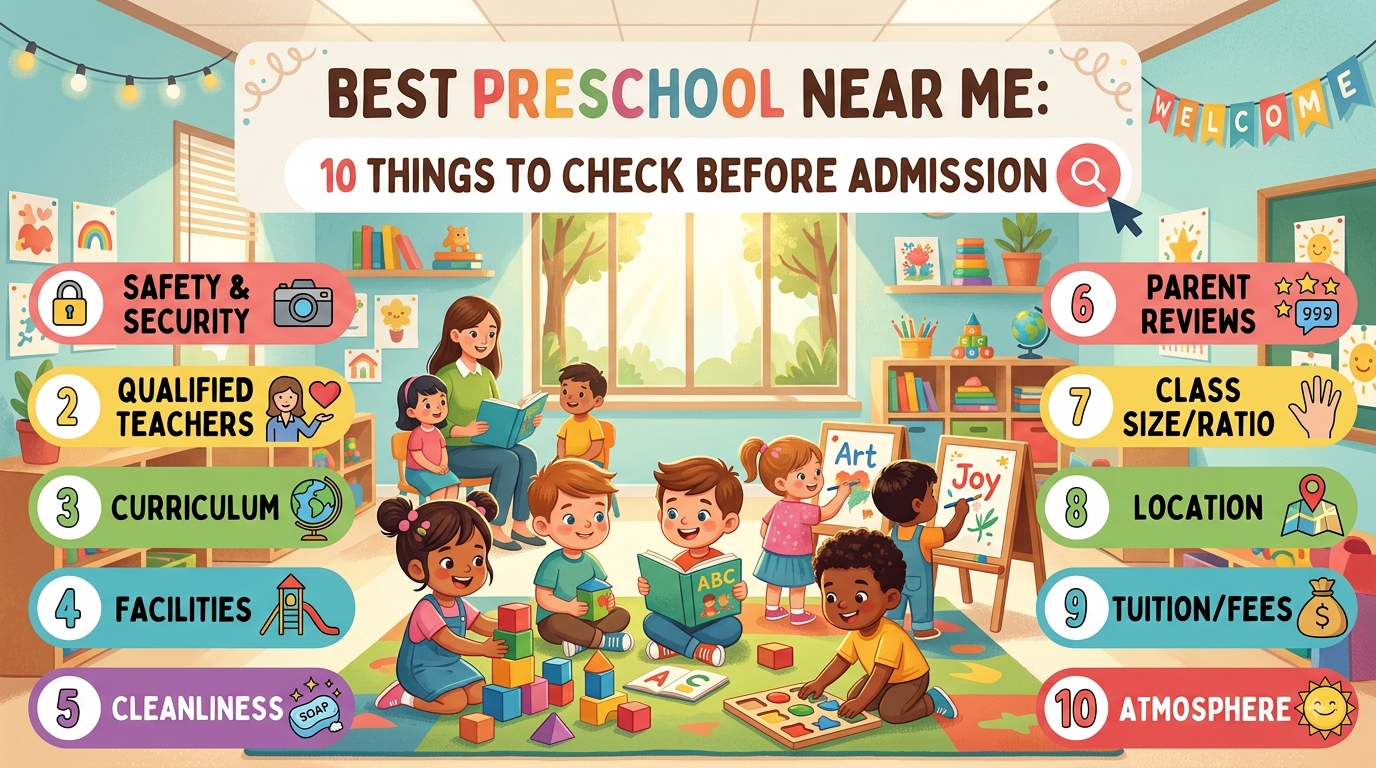
A good preschool should provide more than a convenient location. Parents should carefully evaluate important factors such as safety and security, teacher qualifications, curriculum, classroom environment, hygiene, fees, teacher-to-child ratio, and communication with parents. The right preschool should create a safe, welcoming, and developmentally appropriate environment where children can learn, play, explore, and build essential social and emotional skills.
Before making an admission decision, it is also important to visit shortlisted preschools personally and observe how teachers interact with children, how classrooms are maintained, and whether the overall environment feels comfortable and engaging. Comparing several options can help parents make a more informed decision based on their child’s individual needs.
In this guide, we will cover 10 important things to check before preschool admission. From location and safety to curriculum, teachers, hygiene, fees, and parent reviews, this checklist will help you evaluate a preschool beyond its distance from home and choose an environment where your child can begin their early learning journey with confidence.
More info: https://www.growinnsteps.com/find-the-best-preschool-near-me/
2. What Makes a Preschool the “Best” Choice?
Finding the best preschool for kids is not simply about choosing the most popular school or the one closest to home. Every child is different, and the right preschool should match the child’s developmental needs, personality, learning style, and comfort level. At the same time, parents need to consider practical factors such as location, fees, timings, and communication.
If you are wondering how to choose a preschool, start by looking beyond advertisements and focus on the overall quality of the learning environment. A good preschool should support children’s early development while making them feel safe, confident, and encouraged to explore.
Here are some important qualities parents should look for:
1. Safe and Child-Friendly Environment
Safety should always be a top priority. The preschool should have secure entry and exit points, safe classrooms, child-friendly furniture, appropriate play equipment, and emergency safety procedures. A welcoming environment can also help children feel comfortable when they begin preschool.
2. Qualified and Caring Teachers
Teachers play a major role in a child’s early learning experience. Look for educators who have appropriate training, experience, patience, and a genuine interest in working with young children. Caring teachers can help children develop confidence, communication skills, independence, and positive social habits.
3. Age-Appropriate Curriculum
A quality preschool should offer learning activities that are appropriate for the child’s age and developmental stage. The curriculum should provide opportunities for storytelling, art, music, movement, sensory activities, early literacy, basic numeracy, and social interaction without placing unnecessary academic pressure on young children.
4. Low Student-to-Teacher Ratio
A manageable student-to-teacher ratio allows educators to give children more individual attention. Parents should ask how many children are assigned to each teacher and whether classroom assistants are available. Smaller groups can make it easier for teachers to understand each child’s needs and provide appropriate support.
5. Clean and Hygienic Facilities
Clean classrooms, washrooms, toys, activity areas, and drinking-water facilities are essential in a preschool. During a school visit, parents should observe whether the premises are regularly cleaned and maintained. Good hygiene practices can contribute to a healthier and more comfortable environment for children.
6. Convenient Location
A nearby preschool can make daily routines easier for both parents and children. Shorter travel times can reduce commuting stress and make it easier for parents to manage drop-offs, pickups, and emergencies. However, location should be considered alongside safety, teaching quality, curriculum, and overall suitability.
7. Transparent Fees
Parents should understand the complete cost of admission before making a decision. Ask about registration fees, tuition, annual charges, learning materials, uniforms, transportation, meals, activities, and any other additional costs. A transparent fee structure makes it easier to compare different preschools and plan the family’s education budget.
8. Positive Parent Communication
Good communication between parents and the preschool is important throughout a child’s early education. Find out how the school provides updates about attendance, activities, behavior, learning progress, and important announcements. Regular parent-teacher meetings and accessible communication channels can help parents stay involved.
9. Play-Based Learning
Young children learn naturally through play, exploration, and hands-on experiences. Look for a preschool that combines structured activities with opportunities for free play, storytelling, creative activities, outdoor play, music, movement, and social interaction. A balanced approach can make learning enjoyable while supporting multiple areas of development.
10. Good Reputation and Genuine Reviews
Online reviews and recommendations can help parents create a shortlist, but they should not be the only deciding factor. Look at feedback from parents, visit the preschool personally, and observe the environment before making a decision. A preschool’s reputation should be evaluated alongside its teachers, facilities, curriculum, safety practices, and communication.
Choosing the Right Preschool for Your Child
Ultimately, the best preschool near you is the one that provides the right balance of quality education, safety, care, convenience, and affordability. Instead of choosing a preschool based on a single factor, compare several options and consider which environment is most suitable for your child’s needs.
Taking the time to research, ask questions, visit schools, and compare your options can help you make a confident preschool admission decision.
3. 10 Things to Check Before Preschool Admission
1. Location and Distance From Your Home
Explain why proximity matters.
Points to check:
- Travel time during school hours
- Transportation availability
- Accessibility during emergencies
- Traffic around the preschool
- Pickup and drop-off arrangements
- Whether the location is convenient for parents
Key point: A preschool within a reasonable distance can reduce daily travel stress for both parents and children.
2. Safety and Security Measures
Safety should be one of the top priorities when evaluating a pre-school.
Check for:
- CCTV cameras
- Secure entry and exit
- Visitor management
- Child pickup authorization
- Fire safety equipment
- Emergency exits
- First-aid facilities
- Safe play equipment
- Staff background verification
Important: Encourage parents to physically inspect the premises instead of relying only on advertisements.
3. Teachers and Staff Qualifications
Teachers have a significant impact on a child’s early learning experiences.
Parents should ask:
- What qualifications do teachers have?
- Do teachers have early-childhood education experience?
- How frequently does staff receive training?
- How many children are assigned to each teacher?
- How do teachers handle crying, conflicts, or separation anxiety?
Emphasize that warmth, patience, communication, and experience are just as important as formal qualifications.
4. Curriculum and Teaching Method
Not every preschool follows the same educational approach.
Discuss common approaches such as:
- Play-based learning
- Montessori-inspired learning
- Activity-based learning
- Experiential learning
- Theme-based learning
Parents should look for:
- Age-appropriate activities
- Storytelling
- Art and crafts
- Music and movement
- Outdoor play
- Sensory activities
- Early literacy and numeracy
- Social-emotional development
Key message: Don’t choose a preschool simply because its curriculum sounds impressive. Ask how the curriculum is actually implemented in the classroom.
5. Classroom Environment and Infrastructure
A preschool should feel welcoming, stimulating, and comfortable for young children.
Inspect:
- Classroom size
- Ventilation and lighting
- Child-sized furniture
- Learning corners
- Reading area
- Activity space
- Outdoor play area
- Washrooms
- Drinking-water facilities
- Cleanliness and maintenance
Tip: During your visit, observe whether children look engaged, comfortable, and happy.
6. Student-to-Teacher Ratio
Explain why smaller groups can allow teachers to provide more individual attention.
Parents should ask:
- How many children are in each classroom?
- How many teachers and assistants are present?
- Is there additional support staff?
- How does the preschool handle children who need extra attention?
Connect this with individualized learning, classroom management, and emotional support.
7. Hygiene, Health and Cleanliness
Hygiene and cleanliness are important factors to consider when choosing a preschool because young children spend several hours interacting with classrooms, toys, furniture, play equipment, and other shared spaces. A clean and well-maintained environment can help create a more comfortable and healthy setting for children during their early learning years.
When visiting a preschool, parents should look beyond the overall appearance and check whether proper hygiene practices are followed consistently. A preschool may have attractive classrooms, but regular cleaning and health procedures are equally important.
What Parents Should Check
- Clean Classrooms
Classrooms should be clean, well-ventilated, and free from excessive dust, clutter, or unpleasant odors. Floors, tables, chairs, activity areas, and frequently touched surfaces should be cleaned regularly. - Sanitized Toys and Equipment
Children frequently share toys and learning materials. Ask how often toys, books, activity equipment, and play materials are cleaned or sanitized, particularly items that children frequently touch or put near their mouths. - Clean Washrooms
Preschool washrooms should be clean, child-friendly, easily accessible, and appropriately maintained throughout the day. Check whether toilets, sinks, floors, and other surfaces appear clean during your visit. - Handwashing Facilities
Proper handwashing is an important part of preschool hygiene. Check whether children have easy access to clean water, soap, and suitable handwashing facilities. Parents can also ask how teachers encourage children to wash their hands before eating and after using the washroom. - Safe Drinking Water
Ask how drinking water is provided and maintained. The preschool should have access to clean drinking water and appropriate procedures for keeping water containers or dispensers hygienic. - Regular Cleaning Schedules
Don’t hesitate to ask about the school’s cleaning routine. Find out how frequently classrooms, washrooms, toys, play areas, and other frequently used spaces are cleaned during the day. - Food and Snack Policies
If the preschool provides meals or snacks, ask about food preparation, storage, cleanliness, allergies, and the types of food served. If children bring food from home, find out whether the school has guidelines for safe and appropriate snacks. - Sick-Child Policies
Parents should understand what happens when a child becomes unwell during school hours. Ask whether the preschool has a policy for children showing symptoms of illness, how parents are contacted, and what procedures are followed to reduce the spread of illness. - Pest-Control Practices
Check whether the premises are free from visible signs of insects or pests. Parents can also ask how frequently professional pest-control measures are carried out and whether the school follows appropriate safety procedures afterward.
More info: https://www.growinnsteps.com/admission-open/
What to Observe During a Preschool Visit
An in-person visit can tell you much more about hygiene than photographs on a website. Walk through different areas of the preschool and pay attention to details such as:
- Are floors and surfaces visibly clean?
- Do classrooms smell fresh and well-maintained?
- Are toys organized and clean?
- Are washrooms clean and stocked with necessary supplies?
- Are children encouraged to wash their hands?
- Are garbage bins covered and emptied regularly?
- Does the outdoor play area appear clean and safe?
- Are food preparation and eating areas hygienic?
- Do staff members follow basic cleanliness practices?
Parents should also observe how staff respond to everyday messes. Young children naturally spill food, drop toys, and create small messes while playing. What matters is whether staff members clean these areas promptly and maintain good hygiene throughout the day.
Why Hygiene Should Be Part of Your Preschool Admission Checklist
A preschool’s cleanliness reflects its overall approach to child care and daily operations. While hygiene should not be the only factor in choosing the best preschool near me, it is an important part of evaluating whether a school provides a safe, comfortable, and child-friendly environment.
Before admission, visit the preschool at an active time of day if possible. Seeing the school while children and teachers are using the facilities can give you a more realistic understanding of its everyday hygiene standards.
8. Fees and Admission Costs
Parents should understand the complete cost of preschool admission, not just the advertised monthly fee.
Ask about:
- Registration fee
- Admission fee
- Tuition fee
- Annual charges
- Activity fees
- Books and learning materials
- Uniform costs
- Transportation
- Meals/snacks
- Field trips
- Other miscellaneous charges
Include a useful tip:
Ask for a written fee structure before paying any admission amount.
This makes it easier to compare different preschools fairly.
9. Parent Reviews, Reputation and Communication
Online reviews can help parents shortlist schools, but they shouldn’t be the only deciding factor.
Research:
- Google reviews
- Parent feedback
- Local community recommendations
- Social media presence
- School website
- Testimonials
Also evaluate how the preschool communicates with parents.
Ask about:
- Parent-teacher meetings
- Daily updates
- Communication apps
- Progress reports
- Emergency communication
- Feedback channels
SEO opportunity: Include the phrase “best preschool near me reviews” naturally where appropriate.
10. Visit the Preschool Before Admission
A school visit can reveal things that websites and advertisements cannot.
During the visit, observe:
- How teachers interact with children
- Whether classrooms are organized
- How children behave
- Cleanliness
- Safety arrangements
- Teacher-child interaction
- Outdoor play opportunities
- Overall atmosphere
Suggested parent checklist:
Ask yourself:
- Does my child feel comfortable here?
- Do teachers seem patient and approachable?
- Is the environment safe?
- Does the teaching style suit my child?
- Can I communicate easily with the school?
- Is the fee structure affordable for my family?
4. Questions to Ask During a Preschool Visit
Create a quick-reference section with questions such as:
- What curriculum does the preschool follow?
- What is the teacher-to-child ratio?
- What are the school timings?
- What safety measures are in place?
- How are emergencies handled?
- What happens if my child cries or refuses to participate?
- How often do parents receive progress updates?
- Are meals or snacks provided?
- What is included in the admission fee?
- What is the withdrawal/refund policy?
5. Preschool Admission Checklist for Parents
Choosing the right preschool becomes easier when parents have a clear checklist to follow. Instead of making a decision based only on distance, fees, or advertisements, it is important to evaluate several factors that can affect your child’s learning, safety, comfort, and overall development.
Use this preschool admission checklist when visiting and comparing different schools.
☐ 1. Location
Check the distance between your home and the preschool, daily travel time, accessibility, traffic conditions, and transportation options. A conveniently located preschool can make daily drop-offs and pickups easier for both parents and children.
☐ 2. Safety
Check whether the preschool has CCTV cameras, secure entry and exit points, visitor management procedures, child pickup authorization, fire safety equipment, emergency exits, and appropriate emergency procedures.
☐ 3. Teachers
Ask about teachers’ qualifications, experience, training, and approach toward young children. Observe whether teachers are patient, caring, approachable, and attentive to individual children.
☐ 4. Curriculum
Check whether the curriculum is appropriate for your child’s age and developmental stage. Look for play-based learning, storytelling, creative activities, music, movement, early literacy, basic numeracy, and opportunities for social interaction.
☐ 5. Classrooms
Inspect the classrooms to make sure they are clean, bright, well-ventilated, organized, and child-friendly. Look for suitable furniture, learning materials, activity areas, and enough space for children to move and participate comfortably.
☐ 6. Teacher-to-Child Ratio
Ask how many children are assigned to each teacher and whether classroom assistants are available. A suitable teacher-to-child ratio can allow educators to provide more individual attention and understand each child’s needs.
☐ 7. Hygiene
Check the cleanliness of classrooms, washrooms, toys, play equipment, and eating areas. Also look for handwashing facilities, clean drinking water, regular cleaning routines, and appropriate health and hygiene practices.
☐ 8. Fees
Ask for the complete fee structure before admission. Check registration and admission fees, tuition fees, annual charges, transportation, learning materials, uniforms, meals, activities, and any other additional costs.
☐ 9. Reviews and Reputation
Research genuine feedback from parents and check online reviews before making a decision. However, don’t rely entirely on ratings. Combine online research with personal visits and conversations with parents whenever possible.
☐ 10. School Visit
Always visit the preschool before admission. Observe the classroom environment, teacher-child interaction, cleanliness, safety arrangements, play areas, and overall atmosphere. Most importantly, notice whether your child appears comfortable, curious, and happy in the environment.
Quick Parent Checklist
Before finalizing a preschool, ask yourself:
- ☐ Is the location convenient?
- ☐ Does the preschool provide a safe environment?
- ☐ Are the teachers qualified and caring?
- ☐ Is the curriculum age-appropriate?
- ☐ Are the classrooms clean and child-friendly?
- ☐ Is the teacher-to-child ratio appropriate?
- ☐ Are hygiene standards maintained?
- ☐ Is the fee structure transparent?
- ☐ Are parent reviews generally positive?
- ☐ Have I personally visited the preschool?
Final Tip for Parents
The best preschool near me is not necessarily the closest or cheapest option. The right choice should provide a balance of safety, quality teaching, age-appropriate learning, cleanliness, individual attention, transparent fees, and a nurturing environment. Use this checklist to compare your shortlisted preschools and make an informed admission decision that suits your child’s needs and your family’s requirements.
6. Common Mistakes Parents Should Avoid
Discuss mistakes such as:
- Choosing only based on distance
- Choosing only based on low fees
- Trusting advertisements without visiting
- Ignoring teacher-child interaction
- Not checking safety procedures
- Focusing only on infrastructure
- Ignoring the child’s personality and needs
- Not asking about hidden charges
- Depending entirely on online reviews
- Waiting until the last minute for admission
7. How to Compare Two or More Preschools
Provide a simple comparison framework.
Parents can rate each preschool from 1–5 for:
- Location
- Safety
- Teachers
- Curriculum
- Infrastructure
- Hygiene
- Teacher-child ratio
- Fees
- Reviews
- Overall comfort
Then compare the total scores.
Important: Explain that the highest score isn’t automatically the winner. Parents should consider which factors matter most for their child.
8. When Should You Start Looking for a Preschool?
Discuss:
- Start researching several months before admission.
- Check admission schedules early.
- Visit shortlisted schools.
- Compare fees and programs.
- Ask about availability.
- Prepare documents in advance.
Avoid giving one universal admission age because preschool entry policies can vary by school and location.
9. FAQs About Finding the Best Preschool Near Me
Q1. How do I find the best preschool near me?
Q2. What age is best to start preschool?
Q3. What should I check during a preschool visit?
Q4. How much does preschool admission cost?
Q5. Is a nearby preschool better for my child?
Q6. What questions should I ask a preschool teacher?
Q7. How important are online preschool reviews?
Q8. What safety features should a preschool have?
Q9. How do I compare different preschools?
Q10. What documents are usually required for preschool admission?
10. Final Thoughts
Choosing a preschool is about much more than finding the closest option to your home. While location and convenience are important, parents should also consider factors such as safety, teachers, curriculum, cleanliness, communication, fees, learning environment, and their child’s overall comfort.
Before making a final admission decision, it is a good idea to shortlist 3–5 preschools that meet your basic requirements and visit each one personally. A school visit gives you an opportunity to observe the classrooms, interact with teachers, understand the learning approach, and see how children behave in the environment.
Remember, the best preschool near me is not necessarily the most expensive, most popular, or closest preschool. It is the one that provides a safe, nurturing, engaging, and age-appropriate environment while meeting your child’s developmental needs and your family’s practical requirements.
Take your time, ask questions, compare your options, and trust your observations. A thoughtful preschool choice can give your child a positive foundation for learning, social development, confidence, and future education.
Grow Inn Steps Preschool and Daycare: A Caring Choice for Early Learning
When parents search for the best preschool near me, they usually look for a place that combines safety, quality education, caring teachers, engaging activities, and a comfortable environment. Grow Inn Steps Preschool and Daycare focuses on creating a stimulating, interactive, and secure environment where children can learn, explore, and develop during their formative years.
Grow Inn Steps offers a range of programs designed for different stages of early childhood, including Toddlers, Play Group, Pre-Nursery, Nursery, Kindergarten, and Daycare. Its Play Group program is designed for children between 18 and 24 months, while its broader preschool programs support children’s development through age-appropriate learning experiences.
