

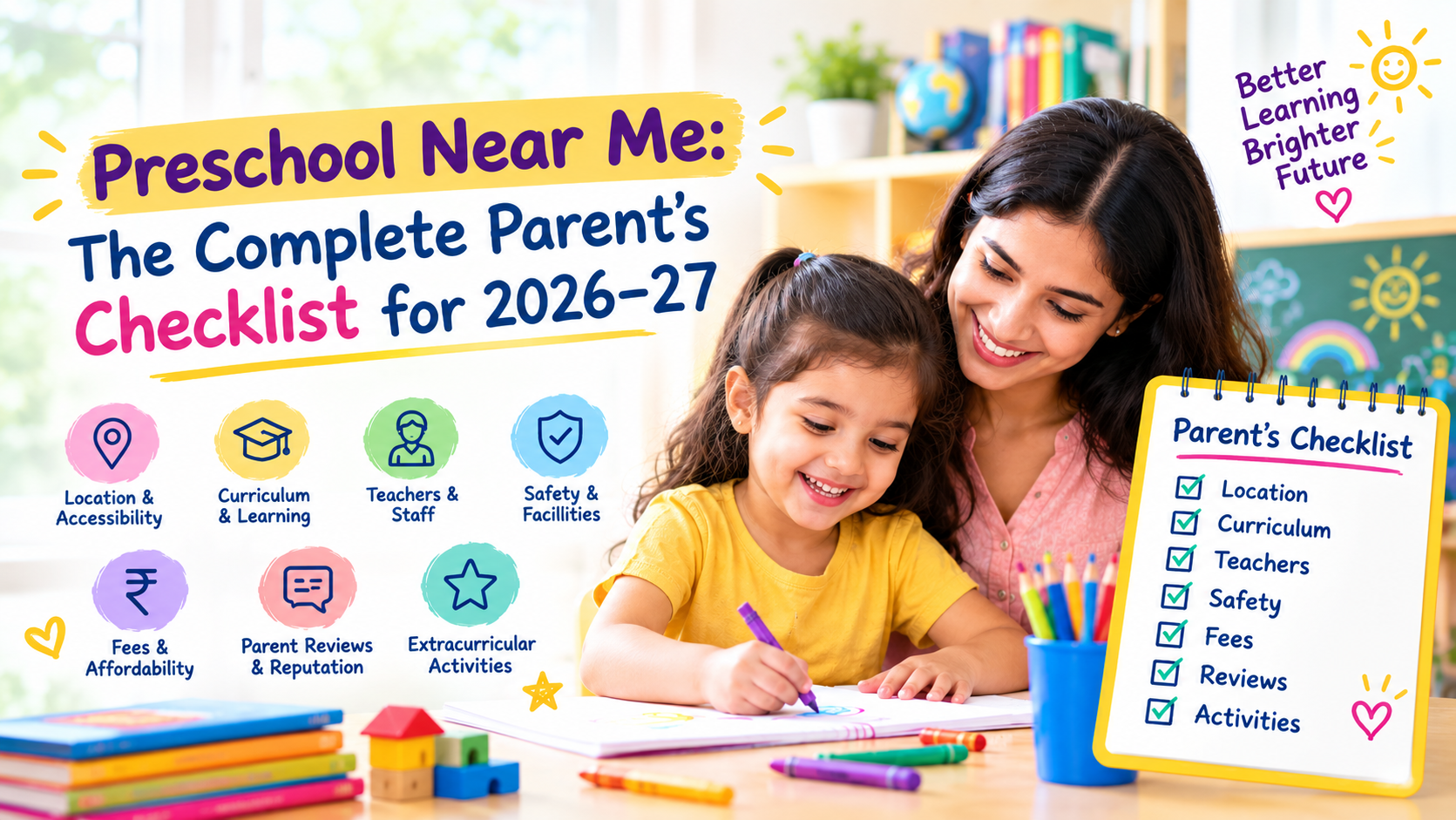
Preschool Near Me: The Complete Parent’s Checklist for 2026–27
As parents, few milestones feel as significant—or as slightly nerve-wracking—as sending our little ones off to their very first classroom experience. If you are anything like us, your evening routine currently involves drinking lukewarm coffee while frantically typing preschool near me into your search bar, wondering how on earth to choose the right environment for your child’s early education.
The landscape of early childhood education is evolving rapidly. As we look ahead to the 2026–27 school year, modern programs are integrating new insights in child development, innovative safety standards, and progressive learning philosophies. Navigating this landscape requires more than just picking the closest facility on the map. It takes a thoughtful strategy, a keen eye, and a comprehensive evaluation checklist.
In this guide, we will walk you through everything we’ve learned about finding, evaluating, and choosing the best early learning environment. Let’s dive into the ultimate parent’s checklist for the upcoming school year.
Why the Search for a Preschool Near Me Starts Well in Advance
When we first began looking into early childhood programs, we were surprised to learn just how early the application windows open. For the 2026–27 academic year, the ideal time to start your search is typically late fall or winter of the preceding year.
Popular programs fill up fast. By searching for a preschool near me early on, we give ourselves the luxury of time—time to tour multiple facilities, observe classrooms in action, review curriculums, and get on waitlists if necessary. Rushing this decision can lead to unnecessary stress, whereas proactive planning ensures our children end up in a nurturing space where they can truly thrive.
Category 1: Philosophy and Curriculum
Every preschool operates under a specific educational philosophy. Before scheduling tours, we find it helpful to understand the major educational styles so we can match them with our child’s unique personality and our family values.
Popular Early Childhood Methodologies:
- Play-Based: Emphasizes learning through guided play, socialization, and exploration. Perfect for children who learn best by doing, building, and imagining.
- Montessori: Focuses on independence, self-directed activity, and hands-on learning with specially designed materials in mixed-age classrooms.
- Reggio Emilia: Child-centered and project-driven, treating the environment as the “third teacher” and heavily incorporating art, nature, and community expression.
- Waldorf: Focuses on a rhythm-based day, imaginative play, practical arts, and a gentle, home-like environment free from heavy academics.
- Academic-Focused: Structured environments that introduce early literacy and math concepts through teacher-led instruction.
Questions to Ask Regarding Curriculum:
- How does the daily schedule balance structured learning with free play?
- How are social-emotional skills, such as sharing and conflict resolution, taught?
- What is the approach to discipline and positive reinforcement?
- How do teachers accommodate different learning paces and styles?
Category 2: Health, Safety, and Environment
Our children’s physical and emotional safety is non-negotiable. When touring any preschool near me, we keep our eyes wide open for cleanliness, security protocols, and overall facility maintenance.
The Safety & Health Audit:
- Secure Access: Are exterior doors locked during school hours? What is the protocol for visitor sign-in and pick-up authorization?
- Cleanliness Standards: How often are toys, surfaces, and bathrooms sanitized? What is the policy regarding sick children and staff?
- Allergy Management: How does the school handle food allergies? Are nut-free policies strictly enforced?
- Emergency Preparedness: Are staff members certified in CPR and pediatric first aid? What do fire, severe weather, and lockdown drills look like for young children?
- Outdoor Spaces: Are playgrounds age-appropriate, fenced in, and regularly inspected? Is there adequate shade?
Category 3: Teacher-to-Student Ratios and Staff Qualifications
The heart and soul of any great school are its educators. We want to know that the people spending their days with our children are not only qualified but genuinely passionate about early childhood development.
What to Look For in the Staff:
- Credentials: Do lead teachers hold degrees in Early Childhood Education (ECE) or related fields? Are assistant teachers trained in child development?
- Turnover Rate: How long have the teachers been at the school? High staff turnover can be a red flag regarding workplace culture or management.
- Teacher-to-Student Ratios: Lower ratios mean more individual attention for your child. Check your local state regulations and see if the preschool meets or exceeds those standards.
- Continuous Learning: Do teachers participate in ongoing professional development workshops?
Category 4: Logistics, Schedule, and Budget
Practicalities matter immensely. A program can have the most inspiring philosophy in the world, but if the drop-off time conflicts with your work schedule or the tuition breaks your budget, it simply won’t work long-term.
Key Logistical Factors:
- Schedule Options: Does the school offer half-day, full-day, or extended-care options? What about flexibility regarding 2-day, 3-day, or 5-day schedules?
- Calendar Alignment: How closely does the school calendar align with local elementary school districts or your work schedule? Do they offer summer camp programs?
- Transparent Tuition: What is the total cost, including registration fees, supply fees, and potential fundraising commitments? Are sibling discounts available?
- Location Convenience: Finding a reliable preschool near me or near our workplace dramatically reduces morning commute stress and leaves more energy for evening family time.
Category 5: Communication and Family Involvement
Strong, open communication ensures we stay in tune with our child’s daily experiences, developmental leaps, and areas where they might need extra support.
Evaluating School-to-Home Connections:
- Communication Tools: Do teachers use dedicated apps to share photos, daily updates, and notes about meals and naps?
- Parent-Teacher Conferences: How often are formal progress reports or meetings scheduled?
- Family Engagement: Are parents welcomed into the classroom for special events, celebrations, or volunteer opportunities?
- Open-Door Policy: Is administration approachable and responsive to parent feedback and concerns?
The Ultimate Tour Checklist: Questions to Ask on Your Visit
When you walk through the doors of a prospective school, your intuition will tell you a lot. However, it helps to have a concrete list of questions ready. Here is a handy checklist we take with us on every tour:
- What does a typical day look like from drop-off to pick-up?
- How do you handle separation anxiety for new students?
- What is your philosophy on potty training? (Do they require kids to be fully potty trained, or do they assist with the process?)
- How is screen time integrated into the curriculum, if at all?
- What meals or snacks are provided, and can we pack our own?
- What opportunities do children have for gross motor play on rainy or freezing days?
Red Flags to Watch Out For
During our tours, we’ve learned to keep an eye out for warning signs that indicate a program might not be the right fit. If you notice any of the following, it’s worth digging deeper or crossing the school off your list:
- Disengaged Staff: Teachers who are looking at their phones, speaking harshly to children, or ignoring students who are crying or isolated.
- Chaotic Environment: A lack of clear structure where children appear unsupervised, unsafe, or overly distressed.
- Vague Safety Policies: Staff who stumble over answers regarding emergency protocols, background checks, or allergy management.
- High Pressure Academics: Worksheets and rote memorization heavily forced upon toddlers or young preschoolers who should be learning through active play.
- Unhappy Children: While adjustment periods are normal, a whole classroom of distressed or fearful children is a major warning sign.
Making the Final Choice: Trusting Your Parental Instinct
After visiting multiple facilities, comparing notes, and reviewing our checklists, the decision ultimately comes down to a mix of logic and intuition.
Ask yourself: Can I picture my child laughing, exploring, and growing in this space? Do I trust the educators to care for my child the way I would? Does the community feel welcoming to our family?
Finding the right preschool near me is a journey of discovery. By doing your research, asking the tough questions, and staying true to your family’s core values, you will find a wonderful foundation where your child can take their very first confident steps into the world of learning.
Here is to an exciting, enriching, and joyful 2026–27 school year for you and your little one!
