

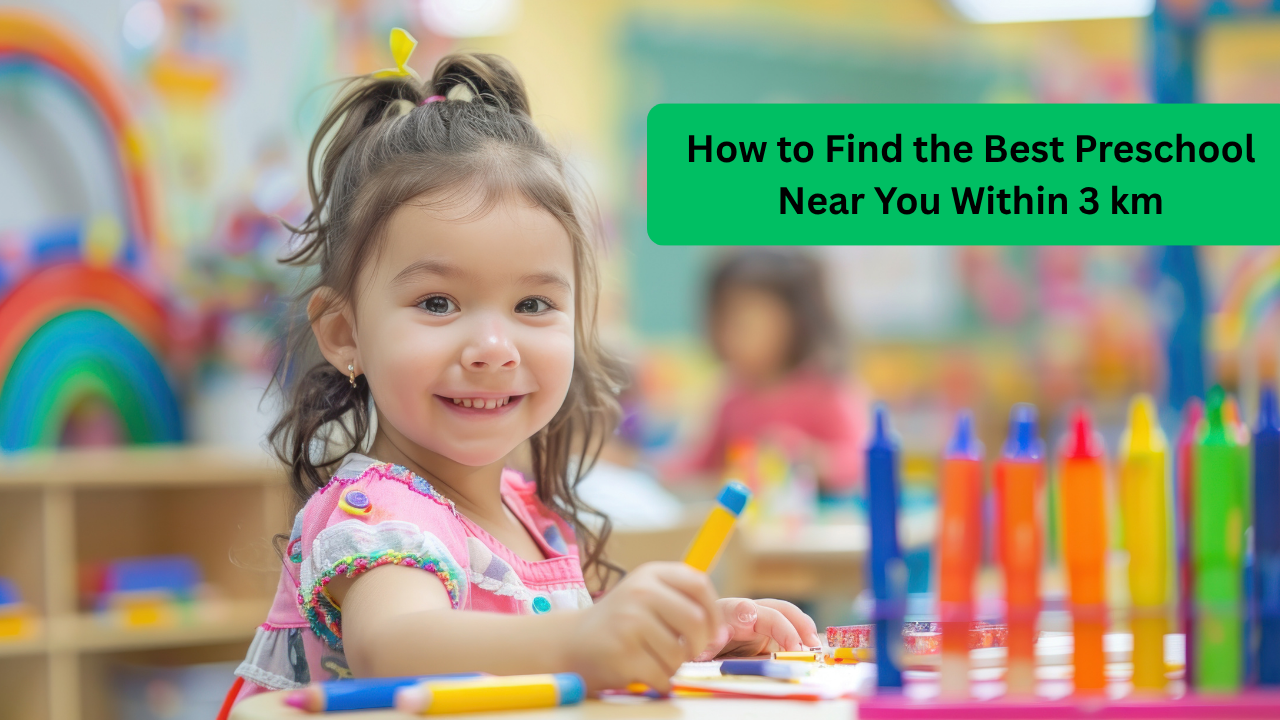
Introduction
Cover:
- Importance of choosing the right preschool
- Why distance matters for young children
- Benefits of finding a preschool within 3 km
- What parents should compare before enrolling
- What this guide will help readers learn
A quality preschool does much more than prepare children for primary school—it helps build confidence, social skills, communication abilities, creativity, and a lifelong love for learning. The right environment encourages children to explore, play, and develop at their own pace while giving parents peace of mind that their child is safe, happy, and receiving the best possible care.
Location is another key factor that should never be overlooked. For young children, long daily commutes can lead to fatigue, stress, and less time for rest, play, and family interaction. A preschool located within 3 km of your home or workplace makes daily routines much easier. It reduces travel time, simplifies drop-offs and pick-ups, minimizes transportation costs, and allows parents to respond quickly in case of emergencies. Children also benefit from spending more time learning and playing instead of traveling.
Finding a preschool within a 3 km radius offers several practical advantages. Parents can maintain a consistent daily schedule, children are less likely to become tired before or after school, and families enjoy greater convenience during busy weekdays. A nearby preschool also makes it easier for grandparents or caregivers to help with pick-up and drop-off responsibilities. Additionally, staying close to home allows children to build friendships with classmates who live in the same neighborhood, creating a stronger sense of community.
However, convenience alone should not determine your decision. Before enrolling your child, it is essential to compare several important factors, including the school’s curriculum, teaching methods, teacher qualifications, safety and hygiene standards, classroom environment, child-to-teacher ratio, learning activities, daycare facilities, fee structure, parent communication, and overall reputation. Visiting the preschool in person and observing how teachers interact with children can provide valuable insights that brochures and websites cannot.
This guide will help you understand exactly how to find the best preschool within 3 km of your location. You’ll learn what features to prioritize, how to compare nearby schools effectively, the questions to ask during school visits, common mistakes to avoid, and practical tips to choose a preschool that supports your child’s learning, development, and overall well-being. By the end of this guide, you’ll be equipped to make a confident and informed decision for your child’s first educational journey.
Why Choosing a Preschool Within 3 km Makes Sense
Explain:
Shorter Travel Time
- Less fatigue
- Better routine
- More sleep
Easier Emergency Access
- Parents can reach quickly
- Faster pickup if needed
Better Parent Participation
- PTMs
- School events
- Activities
How Parents Can Search for the Best Preschool
Finding the right preschool becomes much easier when parents use multiple trusted sources instead of relying on a single recommendation. Here are some of the most effective ways to search for a quality preschool.
-
Google Maps
Google Maps is one of the fastest ways to find preschools near your home or workplace. Simply search for terms like “preschool near me,” “play school near me,” or “daycare near me.”
Google Maps allows you to:
- View preschools within your preferred distance (e.g., 1–3 km).
- Check ratings and reviews from other parents.
- See photos of classrooms, play areas, and facilities.
- Get directions and travel time.
- Find contact numbers and operating hours.
Tip: Look for schools with consistently high ratings and recent positive reviews rather than focusing only on the overall star rating.
-
Local Search
Search engines like Google help parents discover nearby schools through local search results. Try location-specific searches such as:
- Best preschool in Paschim Vihar
- Play school near me
- Montessori school near me
- Preschool within 3 km
These searches usually display:
- Local business listings
- School websites
- Parent reviews
- Maps
- Frequently asked questions
Adding your locality to the search helps you find schools that are most convenient for daily travel.
-
Parent Communities
Parent communities are an excellent source of honest, first-hand experiences. Parents often discuss:
- Teaching quality
- Staff behavior
- Safety standards
- Daily routines
- Child development
- Fee structure
You can ask questions such as:
- Which preschool has the best teachers?
- Which school offers the safest environment?
- Which daycare provides the best care for toddlers?
Real experiences from parents often provide insights that you won’t find in advertisements.
-
School Websites
A preschool’s official website gives you detailed information about its programs and facilities. Look for details such as:
- Curriculum (Montessori, Playway, EYFS, etc.)
- Age groups and admission process
- Fee information
- Daily schedule
- Teacher qualifications
- Safety measures
- Photo gallery and virtual tours
- Parent testimonials
- Contact details and location
A well-maintained website also indicates that the school values transparency and communication with parents.
-
Facebook Groups
Many local Facebook parenting groups regularly discuss schools in specific cities and neighborhoods. These groups are useful for getting:
- Personal recommendations
- Reviews from current parents
- Admission updates
- Fee comparisons
- Experiences with teachers and management
You can search for groups related to your city or locality and ask for recommendations from parents whose children attend nearby schools.
-
Local Recommendations
Sometimes the best recommendations come from people you already know. Ask:
- Friends
- Neighbors
- Family members
- Colleagues
- Pediatricians
- Childcare providers
These recommendations are often more trustworthy because they come from people with direct experience. You can also arrange to visit the schools they recommend and see the environment firsthand.
Tip
Instead of relying on just one source, combine multiple methods. Start by searching on Google Maps and local search, read reviews, visit school websites, seek advice from parent communities and Facebook groups, and finally shortlist schools based on recommendations from people you trust. Once you have a shortlist, schedule campus visits to evaluate the environment, teachers, safety standards, and overall learning experience before making your final decision.
Make a List of Nearby Preschools
How to use this comparison
- Distance: Shorter travel times reduce fatigue and make daily drop-offs easier.
- Fees: Compare tuition along with registration, annual, and activity fees.
- Curriculum: Choose a learning approach that matches your child’s developmental needs.
- Ratings: Read reviews from multiple sources rather than relying on a single rating.
- Teacher Ratio: Lower teacher-to-student ratios generally provide more individual attention.
- Facilities: Look for age-appropriate classrooms, outdoor play areas, CCTV, hygiene standards, and enrichment activities.
- Daycare Availability: Important for working parents who need extended care.
- Transport: Check route coverage, GPS tracking, and safety measures if school transport is required.
- Admission Status: Confirm whether admissions are open, seats are limited, or the school has a waiting list.
Check the Preschool Curriculum
Major Preschool Curriculum Options Explained
Choosing the right preschool curriculum is one of the most important decisions parents make. Every child learns differently, so understanding the strengths of each teaching approach can help you select the best fit for your child’s personality, interests, and developmental needs.
1. Montessori Curriculum
The Montessori method is a child-centered approach that encourages independence, self-discipline, and hands-on learning. Children are given the freedom to choose activities within a carefully prepared environment while teachers act as guides rather than instructors.
Key Features
- Promotes independence and self-confidence
- Hands-on learning using specially designed materials
- Encourages problem-solving and critical thinking
- Mixed-age classrooms support peer learning
- Focus on practical life skills and self-paced development
Best For
- Children who enjoy exploring independently
- Self-motivated learners
- Kids who like structured yet flexible learning environments
2. Playway Curriculum
The Playway approach believes that children learn best through play. Lessons are designed around games, storytelling, music, role-play, art, and interactive activities that make learning enjoyable and stress-free.
Key Features
- Learning through play and fun activities
- Focus on social, emotional, and language development
- Encourages imagination and creativity
- Builds communication and teamwork skills
- Reduces academic pressure during early years
Best For
- Active and energetic children
- Social learners who enjoy group activities
- Young children beginning their preschool journey
3. Reggio Emilia Curriculum
Originating in Italy, the Reggio Emilia approach emphasizes creativity, collaboration, and child-led exploration. Children learn through projects based on their interests, while teachers document and support their learning process.
Key Features
- Encourages creativity and self-expression
- Project-based learning
- Strong emphasis on art and exploration
- Promotes collaboration and communication
- Parents actively participate in the learning journey
Best For
- Curious and imaginative children
- Kids who love art, storytelling, and creative activities
- Children who enjoy asking questions and exploring ideas
4. EYFS (Early Years Foundation Stage)
EYFS is a globally recognized early childhood curriculum developed in the UK. It focuses on the overall development of children across multiple learning areas while preparing them for formal schooling.
Key Features
- Internationally recognized curriculum
- Balanced focus on academics and personal development
- Covers language, literacy, mathematics, physical development, and creativity
- Regular assessments to monitor progress
- Strong emphasis on communication and confidence
Best For
- Families planning international education
- Children who benefit from structured learning with flexibility
- Parents seeking globally accepted education standards
5. Integrated Curriculum
An Integrated Curriculum combines elements from different educational approaches such as Montessori, Playway, EYFS, and activity-based learning. Many modern preschools adopt this blended approach to provide a balanced educational experience.
Key Features
- Combination of multiple teaching methods
- Balances academics, creativity, and play
- Flexible learning based on children’s developmental needs
- Focus on cognitive, emotional, physical, and social growth
- Adapts teaching strategies to suit different learners
Best For
- Children with varied learning preferences
- Parents looking for a well-rounded preschool experience
- Families seeking flexibility without limiting learning to one methodology
How to Choose the Right Curriculum Based on Your Child’s Learning Style
Every child is unique, and the best curriculum is one that matches how they naturally learn.
|
Child’s Learning Style |
Recommended Curriculum | Why It Works |
| Independent and self-motivated | Montessori | Encourages self-learning, responsibility, and decision-making. |
|
Active and playful |
Playway |
Uses games and activities to make learning engaging and enjoyable. |
|
Creative and imaginative |
Reggio Emilia |
Supports artistic expression, exploration, and project-based learning. |
|
Structured learner |
EYFS |
Offers a balanced framework with clear developmental goals. |
|
Learns in different ways |
Integrated Curriculum |
Combines the strengths of multiple teaching approaches for holistic development. |
Additional Tips for Parents
When evaluating a preschool curriculum, also consider:
- Observe your child: Notice whether they enjoy independent activities, group play, creative projects, or structured routines.
- Visit the preschool: Watch how teachers interact with children and how the curriculum is implemented in daily activities.
- Talk to educators: Ask how learning is personalized for children with different abilities and interests.
- Focus on holistic development: The ideal curriculum should nurture cognitive, emotional, physical, social, and language skills—not just academics.
- Choose a supportive environment: A caring, safe, and engaging preschool often has a greater impact than the curriculum alone.
Visit the Preschool Personally
Things Parents Should Observe When Visiting a Preschool
Choosing the right preschool goes beyond academics. During your visit, pay close attention to the learning environment, safety standards, and facilities available for children.
-
Classroom Environment
A classroom should be designed to make children feel comfortable, safe, and excited to learn.
- Clean, organized, and well-maintained classrooms
- Bright, spacious, and well-ventilated learning spaces
- Child-friendly furniture with rounded edges and appropriate height
- Educational displays and age-appropriate learning materials
-
Outdoor Play Area
Outdoor play is essential for a child’s physical development and social skills.
- Safe and well-maintained play equipment
- Soft flooring or safety surfaces to reduce the risk of injuries
- Secure boundaries and proper adult supervision
-
Indoor Activity Rooms
A quality preschool should offer dedicated spaces that encourage creativity and holistic development.
- Reading Corner: A cozy library with age-appropriate books
- Music Room: Instruments and activities that build rhythm and creativity
- Art & Craft Room: Opportunities for painting, drawing, and hands-on projects
- STEM Activity Area: Interactive learning experiences that promote curiosity, problem-solving, and critical thinking
-
Hygiene and Safety
Cleanliness and hygiene play a vital role in keeping children healthy.
- Clean and child-friendly washrooms
- Safe and easily accessible drinking water
- Regular sanitization of classrooms, toys, and common areas
- Proper waste disposal and handwashing facilities
- Clearly defined health and safety protocols
Evaluate the Teachers
Teacher Qualifications and Experience
The quality of teachers has a direct impact on your child’s learning, confidence, and emotional development. While a beautiful campus and modern facilities are important, skilled and caring teachers are what truly shape a child’s preschool experience.
Qualified Early Childhood Educators
Look for teachers who have qualifications in Early Childhood Education (ECE), Nursery Teacher Training (NTT), Montessori training, or similar certifications. These programs prepare educators to understand child development, age-appropriate teaching methods, and classroom management.
Relevant Teaching Experience
Experience matters because preschool teachers work with children during their most formative years. Teachers with several years of experience are generally better equipped to:
- Understand different learning styles
- Handle separation anxiety
- Manage classroom behavior positively
- Encourage social and emotional development
- Communicate effectively with parents
Child-Friendly Behaviour
A preschool teacher should create a warm, welcoming environment where every child feels safe and valued.
Qualities to Look For
- Friendly and approachable personality
- Patient and calm under pressure
- Encouraging rather than critical
- Respectful toward every child
- Uses positive reinforcement instead of punishment
- Makes learning fun through stories, songs, and activities
Happy, engaged children often reflect caring and supportive teachers.
Communication Skills
Strong communication helps build trust between teachers, children, and parents.
Good preschool teachers should:
- Explain concepts in simple, age-appropriate language
- Listen patiently to children’s thoughts and questions
- Provide regular updates to parents
- Discuss developmental milestones honestly
- Be responsive to parent concerns and feedback
Schools that maintain open communication through parent meetings, apps, daily reports, or newsletters help families stay involved in their child’s progress.
Emotional Support
Young children need emotional security before they can learn effectively. Preschool teachers should nurture children’s emotional well-being by:
- Comforting children during separation anxiety
- Helping resolve conflicts peacefully
- Encouraging confidence and independence
- Celebrating achievements, big and small
- Teaching empathy, sharing, and kindness
- Creating an inclusive environment where every child feels accepted
A nurturing teacher helps children develop self-esteem, resilience, and positive relationships with others.
Teacher-Student Ratio
A low teacher-student ratio ensures every child receives individual attention, better supervision, and personalized learning support.
Ideal Teacher-Student Ratios
|
Age Group |
Recommended Ratio |
|
Toddlers (1.5–2.5 years) |
1 teacher for every 6–8 children |
|
Nursery (2.5–4 years) |
1 teacher for every 10–12 children |
|
Kindergarten (4–6 years) |
1 teacher for every 15–20 children |
Many quality preschools also employ teaching assistants or caregivers to provide additional support, especially in toddler classrooms.
Why Teacher Quality Matters
Children spend several hours each day with their preschool teachers. Caring, qualified, and experienced educators help children:
- Build confidence
- Develop language and social skills
- Foster curiosity and creativity
- Learn independence
- Enjoy a positive first school experience
When choosing a preschool, spend time observing the teachers as closely as you evaluate the facilities. The right teachers can make all the difference in your child’s early learning journey.
Safety Should Be Your Top Priority
Essential Preschool Safety Features to Look For
- CCTV Monitoring: Classrooms, play areas, and common spaces should be monitored with CCTV cameras to enhance child safety and transparency.
- Secure Entry: A controlled access system ensures that only authorized parents, guardians, and staff can enter the premises.
- Visitor Management: Every visitor should be registered, verified, and monitored before being allowed inside the preschool.
- Fire Safety: The preschool should have fire extinguishers, smoke detectors, clearly marked emergency exits, and regular fire safety drills.
- First Aid: A fully stocked first aid kit and trained staff should be available to handle minor injuries and medical emergencies promptly.
- Child Protection Policy: The school should follow a well-defined child protection policy that safeguards children from abuse, neglect, bullying, and inappropriate behavior.
- Background Verification: All teachers, caregivers, drivers, and support staff should undergo thorough background and police verification before joining.
- Emergency Preparedness: The preschool should have documented emergency response plans, regular evacuation drills, and clear communication procedures for parents during emergencies.
Top of Form
Look for Age-Appropriate Learning Activities
A quality preschool should offer a balanced mix of activities that support your child’s cognitive, physical, social, emotional, and creative development. Look for a curriculum that includes:
- Storytelling – Builds imagination, listening skills, vocabulary, and early literacy.
- Music – Encourages rhythm, memory, creativity, and self-expression through songs and instruments.
- Dance – Improves coordination, balance, confidence, and physical fitness.
- Art & Craft – Develops creativity, problem-solving, and fine motor skills through drawing, painting, and crafting.
- Sensory Play – Engages children with textures, sounds, colors, and materials to strengthen sensory processing and exploration.
- STEM Activities – Introduces basic concepts in science, technology, engineering, and mathematics through hands-on experiments and play.
- Outdoor Games – Promotes physical health, teamwork, social interaction, and active learning.
- Language Development – Enhances communication skills through conversations, rhymes, phonics, reading, and vocabulary-building activities.
- Fine Motor Skill Activities – Includes puzzles, coloring, threading, cutting, and block building to improve hand-eye coordination.
- Gross Motor Skill Activities – Encourages running, jumping, climbing, balancing, and other movements that build strength and coordination.
A preschool that offers these age-appropriate learning experiences creates a well-rounded environment where children can develop academically, socially, emotionally, and physically while enjoying the process of learning through play.
Does the Preschool Offer Daycare? Benefits for Children and Working Parents
Many parents today look for a preschool with daycare because it offers both quality early education and reliable childcare in one place. Instead of managing separate arrangements for learning and care, families can choose a program that supports their child’s development throughout the day.
If you’re searching for a daycare near me, selecting a preschool that includes daycare can provide convenience, safety, and a structured routine for your child.
1. Ideal for Working Parents
A preschool with daycare is designed to support parents with busy work schedules. Children can stay in a safe, supervised environment before or after preschool hours, reducing the stress of arranging multiple caregivers or pickups.
Benefits include:
- Reliable childcare throughout the workday
- Peace of mind knowing children are supervised by trained staff
- Consistent daily routine for children
- Reduced travel and scheduling hassles
2. Flexible Timings
Many preschool daycare programs offer flexible schedules to accommodate different family needs. Whether you require full-day care, half-day care, or extended evening hours, flexible options make it easier to balance work and family responsibilities.
Common options include:
- Half-day daycare
- Full-day daycare
- Extended care before and after school
- Emergency or occasional daycare (at select centers)
3. Nutritious Meals and Snacks
Healthy nutrition plays an important role in a child’s growth and learning. Most preschools with daycare provide balanced meals and healthy snacks prepared with children’s nutritional needs in mind.
Meal plans often include:
- Breakfast (where applicable)
- Mid-morning snacks
- Fresh lunch
- Evening snacks
- Seasonal fruits and plenty of hydration
Parents should always check the menu and discuss any food allergies or dietary requirements with the preschool.
4. Comfortable Nap Time
Young children need adequate rest to stay active and engaged. Quality daycare programs include a dedicated nap or quiet time in a clean, comfortable, and supervised environment.
Nap time benefits include:
- Improved mood and behavior
- Better concentration during activities
- Healthy physical development
- Reduced fatigue after a busy morning
5. Homework Assistance
For children in kindergarten or early primary classes, many daycare programs provide supervised homework support. Teachers or caregivers help children complete assignments while encouraging independent learning.
Homework support may include:
- Reading practice
- Writing exercises
- Basic mathematics
- Creative learning activities
- Guided revision
This allows parents to spend more quality family time in the evening rather than focusing entirely on schoolwork.
6. Fun Evening Activities
Daycare should be more than just supervision. A good preschool with daycare keeps children engaged through enjoyable and educational activities after school hours.
Popular evening activities include:
- Art and craft
- Music and dance
- Storytelling sessions
- Indoor and outdoor games
- Puzzle-solving
- Building blocks and STEM-based activities
- Yoga and mindfulness exercises
These activities help children develop creativity, communication skills, confidence, and social interaction.
How to Choose the Right Preschool with Daycare
When comparing options for a daycare near me, consider the following:
- Qualified and caring teachers
- Safe and hygienic facilities
- CCTV surveillance and secure entry systems
- Age-appropriate learning programs
- Healthy meals and snacks
- Comfortable sleeping arrangements
- Flexible daycare timings
- Parent communication through apps or regular updates
- Positive reviews from other parents
Compare Preschool Fees
When comparing preschools, it’s important to look beyond the total fee and understand what each component covers. A transparent fee structure helps parents make informed decisions and avoid unexpected expenses later.
1. Admission Fee
The admission fee is a one-time payment made when your child enrolls in the preschool. It covers administrative processes, student onboarding, and initial setup. This fee is generally non-refundable.
2. Registration Fee
The registration fee is paid when you submit your child’s application. It covers the processing of admission forms, document verification, and evaluation. In most schools, this fee is non-refundable, regardless of whether admission is confirmed.
3. Security Deposit
Some preschools collect a refundable security deposit to cover any damages or pending dues. The amount is usually returned when your child leaves the school, provided all terms and conditions have been met.
4. Tuition Fee
Tuition is the primary recurring fee and covers your child’s daily education. It includes:
- Classroom teaching
- Learning materials used during class
- Teacher salaries
- Academic planning and assessments
- Regular classroom activities
Tuition fees may be collected monthly, quarterly, or annually.
5. Activity Fee
Activity fees support your child’s overall development beyond academics. They may include:
- Art and craft sessions
- Music and dance
- Sports and physical activities
- Celebrations and cultural events
- STEM and sensory learning activities
- Field trips (in some schools)
These activities help develop creativity, communication, confidence, and social skills.
6. Transport Fee
If the preschool offers transportation, a transport fee is charged based on the distance between your home and the school. This fee typically covers:
- School bus or van service
- Driver and attendant salaries
- Vehicle maintenance
- Fuel and safety measures
Some schools charge monthly, while others collect transport fees quarterly.
7. Uniform Charges
Uniform fees cover the cost of school clothing, including:
- Daily uniform
- Winter uniform (if applicable)
- School T-shirts
- ID card and accessories
Some schools include uniforms in admission packages, while others charge separately.
8. Books and Learning Materials
This fee generally includes:
- Student workbooks
- Storybooks
- Activity books
- Worksheets
- Stationery kits
- Learning resources for the academic year
Some preschools also provide digital learning materials as part of this package.
9. Daycare Charges
If you require extended childcare beyond preschool hours, daycare charges apply. Fees usually depend on:
- Number of hours required
- Meals and snacks provided
- Nap facilities
- Supervised playtime
- Homework assistance (for older children)
Many schools offer flexible daycare packages such as half-day, full-day, or hourly options.
Why Value Matters More Than the Lowest Fee
Choosing a preschool based solely on the lowest cost can be expensive in the long run if the quality of education, safety, or child development is compromised.
A preschool that offers better value typically provides:
- Qualified and experienced teachers
- Safe and hygienic classrooms
- Low teacher-to-child ratios
- Age-appropriate learning programs
- Well-equipped indoor and outdoor play areas
- Regular parent communication
- Strong safety and security measures
- Nutritious meals (where applicable)
- Comprehensive child development programs
- Transparent fee structure with minimal hidden charges
A slightly higher fee often reflects better infrastructure, experienced educators, modern teaching methods, enhanced safety standards, and a richer learning environment that supports your child’s cognitive, emotional, physical, and social development.
Questions Parents Should Ask Before Paying Fees
- Which fees are one-time and which are recurring?
- Are books and uniforms included in the admission package?
- Are activity fees charged separately?
- Is transportation optional?
- What does the daycare fee include?
- Are there any hidden or annual charges?
- Is the security deposit refundable?
- What is the school’s refund policy if admission is cancelled?
Read Parent Reviews Carefully
Where to check:
- Google Reviews
- Justdial
- School website
What to notice:
- Teacher behaviour
- Child happiness
- Safety
- Communication
- Complaints
- Long-term satisfaction
Ask These Questions During Your School Visit
Suggested questions:
- What curriculum do you follow?
- What is the teacher-child ratio?
- Is daycare available?
- How are emergencies handled?
- What security measures exist?
- How do you communicate with parents?
- Are meals provided?
- How is discipline managed?
- How are children assessed?
- Is transport available?
Signs of a High-Quality Preschool
Checklist:
✔ Happy children
✔ Friendly teachers
✔ Safe campus
✔ Interactive classrooms
✔ Good communication
✔ Qualified educators
✔ Clean facilities
✔ Structured curriculum
✔ Positive reviews
✔ Transparent fees
Warning Signs to Avoid
Explain red flags:
- Poor hygiene
- High teacher turnover
- No outdoor play
- Hidden fees
- Poor communication
- Unsafe equipment
- Overcrowded classrooms
- Negative reviews
- Lack of transparency
Why Early Childhood Education Matters
The first few years of a child’s life are the foundation for lifelong learning, behavior, and well-being. During this period, children experience rapid physical, emotional, social, and cognitive growth. A high-quality early childhood education program helps nurture these abilities through structured play, exploration, and meaningful interactions, preparing children for success in school and beyond.
· Brain Development
The human brain develops faster during the first five years than at any other stage of life. Children who participate in quality early childhood education engage in activities that stimulate memory, problem-solving, creativity, and critical thinking. Through puzzles, storytelling, music, art, and hands-on learning experiences, children build strong neural connections that support lifelong learning.
· Social Skills
Learning how to interact with others is an important milestone in early childhood. In a preschool environment, children learn to share, cooperate, communicate, and resolve conflicts respectfully. Group activities encourage teamwork and empathy while helping children understand social rules and build meaningful friendships. These social experiences create a strong foundation for healthy relationships throughout life.
· Emotional Intelligence
Children need guidance to recognize, express, and manage their emotions. Early childhood educators create supportive environments where children learn patience, self-control, empathy, and resilience. By understanding their own emotions and respecting the feelings of others, children develop emotional intelligence that benefits both their academic performance and personal relationships.
· Language Development
Language skills grow rapidly during the preschool years. Daily conversations, storytelling, songs, rhymes, and interactive reading help children expand their vocabulary and improve listening and communication skills. Quality early childhood education encourages children to ask questions, express ideas confidently, and develop the literacy skills needed for future academic success.
· Confidence
Every small achievement contributes to a child’s self-esteem. Whether completing a puzzle, participating in classroom activities, or learning a new skill, children gain confidence through positive reinforcement and encouragement. A nurturing preschool environment motivates children to explore, take healthy risks, and believe in their abilities.
· Independence
One of the key goals of early childhood education is to help children become independent learners. Preschool routines encourage children to manage simple daily tasks such as organizing their belongings, making choices, following instructions, and taking responsibility for their actions. These experiences build self-reliance and prepare children for greater responsibilities as they grow.
· School Readiness
A quality preschool program prepares children for a smooth transition into primary school. Beyond learning letters and numbers, children develop essential skills such as concentration, communication, problem-solving, time management, and classroom behavior. They become familiar with structured routines, group learning, and following instructions, making them more confident and ready to succeed in formal education.
Building a Strong Foundation for the Future
Investing in early childhood education is one of the most valuable decisions parents can make. It supports healthy brain development, strengthens social and emotional skills, enhances language and communication, builds confidence and independence, and prepares children for academic success. By giving children the right learning experiences during their formative years, parents lay the groundwork for a lifetime of curiosity, resilience, and achievement.
Benefits of Enrolling Early
Explain:
- More admission choices
- Better discounts
- Easier transition
- Child adjustment
- Priority seats
Why Local Preschools Build Stronger Communities
Discuss:
- Local friendships
- Community events
- Parent networking
- Easier coordination
- Familiar neighborhood
How Grow Inn Steps Helps Parents Find Quality Preschool Education
(Brand-focused section that can be adapted to your preschool.)
Include:
- Child-centric curriculum
- Play-based learning
- Safe campus
- Experienced educators
- Activity-based education
- Smart classrooms
- Parent communication
- Daycare facilities (if applicable)
- Clean environment
- Focus on holistic development
- Convenient neighborhood locations
End with a soft call-to-action encouraging parents to schedule a campus visit or inquiry.
Final Thoughts
Summarize:
- Distance matters, but quality matters more.
- Visit multiple schools before making a decision.
- Compare curriculum, safety, teachers, activities, and fees.
- Start the admission process early to secure a seat in your preferred preschool.
Frequently Asked Questions (FAQ)
Is a preschool within 3 km better than one farther away?
A nearby preschool usually means shorter travel time, less fatigue for young children, and greater convenience for parents. However, always prioritize the quality of education, safety, and teaching standards alongside distance.
What is the ideal age for preschool admission?
Most preschools accept children between 2 and 3 years for playgroup, with nursery admissions typically starting around 3 years, depending on the school’s policy.
How do I know if a preschool is safe?
Look for CCTV surveillance, secure entry and exit systems, trained staff, emergency preparedness, first-aid facilities, child protection policies, and a clean, well-maintained campus.
Which preschool curriculum is best?
There is no one-size-fits-all answer. Montessori, Playway, Reggio Emilia, EYFS, and integrated curricula each have unique strengths. Choose one that aligns with your child’s learning style and developmental needs.
How much does preschool cost?
Fees vary based on location, facilities, curriculum, and services such as daycare or transport. Compare the overall value—including teaching quality and infrastructure—rather than choosing solely on price.
Should I visit the preschool before admission?
Yes. A campus visit helps you assess the classrooms, hygiene, teacher interactions, safety measures, learning environment, and overall atmosphere, making it easier to choose the right preschool for your child.
