

Introduction
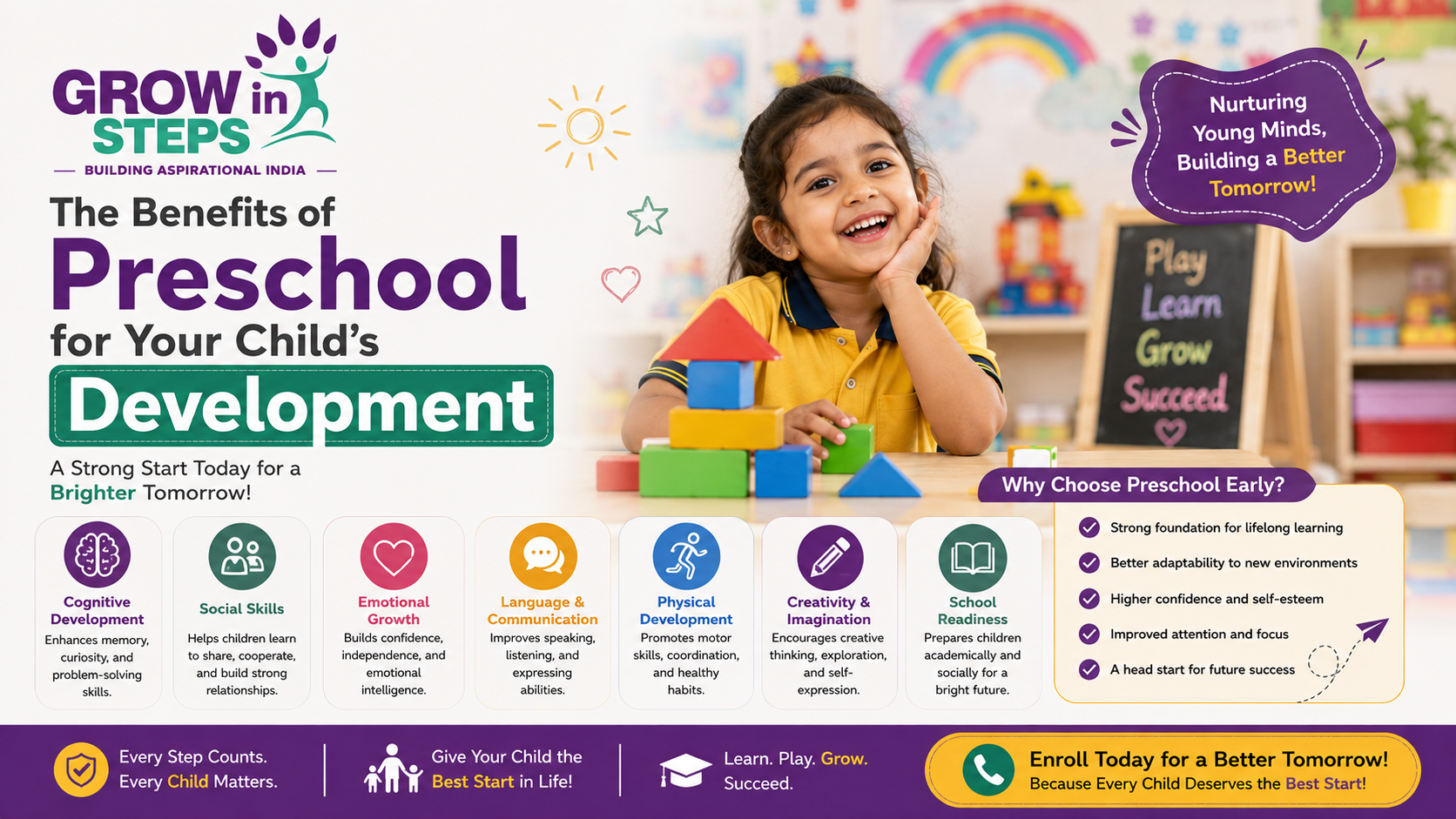
The early years of a child’s life are the foundation for lifelong learning, growth, and success. During this critical stage, a child’s brain develops rapidly, making it the ideal time to nurture curiosity, creativity, communication, and essential life skills. The experiences children have in their early years significantly influence their cognitive, social, emotional, and physical development, shaping how they learn, interact with others, and adapt to new environments in the future.
One of the most effective ways to support this development is through quality preschool education. A well-designed preschool provides a safe, nurturing, and stimulating environment where children learn through play, exploration, and hands-on activities. Beyond introducing early literacy and numeracy concepts, preschool helps children develop social skills, build confidence, improve communication, strengthen emotional resilience, and enhance physical coordination. These preschool benefits prepare children not only for kindergarten but also for lifelong learning and personal growth.
For parents, understanding the many preschool benefits is essential when choosing the right early education program. While proximity and affordability are important, factors such as curriculum, qualified teachers, safety standards, learning environment, and opportunities for holistic development also play a vital role in ensuring a positive preschool experience.
In this article, we’ll explore the key preschool benefits for your child’s development, including improvements in cognitive abilities, language and communication, social and emotional skills, creativity, physical development, and school readiness. You’ll also learn how to choose the right preschool to provide your child with the strongest possible foundation for future success.
What Is Preschool?
A preschool is an early childhood education program designed to help young children develop the foundational skills they need before entering kindergarten or primary school. It provides a safe, nurturing, and stimulating environment where children learn through play, exploration, and age-appropriate activities. Unlike formal schooling, preschool focuses on holistic development by encouraging curiosity, creativity, communication, and social interaction while making learning enjoyable.
Most preschools cater to children between 2 and 5 years of age, although the exact age requirements may vary depending on the school and curriculum. During these formative years, children experience rapid brain development, making it the ideal time to introduce structured learning experiences that support cognitive, emotional, physical, and social growth.
The primary purpose of early childhood education is to build a strong foundation for lifelong learning. Preschool introduces children to basic concepts such as letters, numbers, shapes, colors, and language while also helping them develop essential life skills like sharing, cooperation, problem-solving, independence, and self-confidence. These early experiences play a crucial role in preparing children for the transition to formal schooling.
Although the terms preschool and daycare are sometimes used interchangeably, they serve different purposes. Preschool primarily focuses on education through a structured curriculum that fosters school readiness and the child’s holistic development. A daycare, on the other hand, is mainly designed to provide childcare for working parents. While many daycare centers include educational activities, their primary objective is supervision and care, whereas preschools emphasize learning and developmental milestones.
One of the greatest preschool benefits is its emphasis on structured learning through play. Children learn best when they are actively engaged in enjoyable, hands-on experiences. Activities such as storytelling, music, art and craft, puzzles, role-playing, outdoor games, and group projects encourage children to explore, ask questions, solve problems, and interact with others. This play-based approach helps develop critical thinking, communication, creativity, emotional intelligence, and physical coordination while fostering a lifelong love of learning.
Why Early Childhood Development Matters
- Brain development during the early years
- Building lifelong learning habits
- Importance of positive early experiences
- How preschool supports holistic growth
Top Preschool Benefits for Child Development
Develops Social Skills
- Learning to share and cooperate
- Making friends
- Teamwork and communication
- Respect for others
Improves Communication and Language Skills
- Vocabulary development
- Listening skills
- Speaking confidently
- Storytelling and conversations
Builds Emotional Intelligence
- Understanding emotions
- Self-confidence
- Independence
- Emotional regulation
Enhances Cognitive Development
- Problem-solving
- Critical thinking
- Memory development
- Early math and science concepts
Encourages Creativity and Imagination
- Art and craft
- Music and dance
- Pretend play
- Creative expression
Strengthens Physical Development
- Fine motor skills
- Gross motor skills
- Outdoor play
- Hand-eye coordination
Builds Independence and Responsibility
- Following routines
- Making simple decisions
- Self-care habits
- Responsibility for belongings
Prepares Children for Kindergarten and School
- Classroom readiness
- Learning routines
- Following instructions
- Confidence in new environments
Academic Preschool Benefits
Explain how preschool introduces foundational learning:
One of the most significant preschool benefits is that it lays a strong academic foundation while making learning enjoyable and engaging. Rather than relying on traditional classroom instruction, preschools use play-based activities, hands-on experiences, storytelling, music, and interactive games to introduce children to essential concepts. This approach helps children develop a positive attitude toward learning and prepares them for a smooth transition to kindergarten and primary school.
Letter Recognition
Preschool introduces children to the alphabet through songs, picture books, flashcards, puzzles, and fun classroom activities. They begin to recognize uppercase and lowercase letters, identify letter sounds, and connect letters with familiar words and objects. These early literacy skills form the foundation for reading and writing.
Numbers and Counting
Children are introduced to basic mathematical concepts such as counting, number recognition, sorting, matching, and simple patterns. Through games, blocks, counting objects, and everyday activities, they learn to understand numbers in a practical and enjoyable way. These early math experiences help build confidence and prepare children for more advanced mathematical learning.
Shapes and Colors
Recognizing shapes and colors is another important milestone in early childhood education. Preschool activities encourage children to identify, compare, and classify different shapes and colors through art projects, puzzles, building blocks, and creative play. These experiences strengthen observation, visual perception, and problem-solving skills.
Early Writing Skills
Before children begin writing full words, they develop the fine motor skills needed for writing. Activities such as drawing, coloring, tracing lines, holding crayons and pencils, and practicing simple strokes improve hand-eye coordination and pencil control. Gradually, children learn to write letters, numbers, and eventually their own names, building confidence in their writing abilities.
Reading Readiness
One of the key preschool benefits is preparing children for successful reading. Teachers nurture reading readiness through storytelling, rhymes, songs, picture books, and interactive discussions. Children expand their vocabulary, improve listening comprehension, recognize sounds and words, and develop an interest in books, all of which contribute to future reading success.
Curiosity for Learning
Perhaps the greatest academic advantage of preschool is that it inspires a lifelong love of learning. Children are encouraged to ask questions, explore new ideas, experiment, and discover the world around them through hands-on activities. This curiosity helps develop critical thinking, creativity, and problem-solving skills while motivating children to become enthusiastic and confident learners.
Social and Emotional Preschool Benefits
Discuss how preschool helps children:
- Build friendships
- Work in groups
- Develop empathy
- Resolve conflicts peacefully
- Gain confidence
- Adapt to new situations
Long-Term Benefits of Preschool
Explain the lasting impact:
- Better academic performance
- Improved communication skills
- Greater confidence
- Stronger social relationships
- Higher independence
- Better adaptability
- Love for lifelong learning
How Preschool Supports Parents
Discuss how preschool also benefits families:
- Reliable daily routine
- Professional guidance from educators
- Regular developmental updates
- Opportunities for parent-school collaboration
- Better work-life balance
Choosing the Right Preschool
Guide parents on what to evaluate:
- Qualified Teachers
- Safe and Secure Environment
- Child-Centered Curriculum
- Hygiene and Cleanliness
- Learning Through Play
- Parent Communication
- Class Size and Teacher-Child Ratio
- Infrastructure and Facilities
Signs Your Child Is Ready for Preschool
Include indicators such as:
- Curiosity to explore
- Interest in interacting with other children
- Ability to follow simple instructions
- Basic communication skills
- Comfort with short periods away from parents
Common Myths About Preschool
- Preschool Is Only About Academics
- Children Are Too Young to Learn
- Staying at Home Is Always Better
- Preschool Is Only for Working Parents
Frequently Asked Questions (FAQs)
What are the biggest preschool benefits?
At what age should my child start preschool?
How does preschool improve social skills?
Can preschool help shy children?
Is preschool necessary before kindergarten?
How many hours should a child attend preschool?
How do I choose the best preschool?
Conclusion
The preschool benefits extend far beyond early academics, providing children with a strong foundation for lifelong success. A quality preschool nurtures every aspect of a child’s development, including cognitive, emotional, social, physical, and language skills. Through engaging, play-based learning experiences, children develop curiosity, confidence, creativity, communication abilities, and the essential life skills they need to thrive both inside and outside the classroom.
One of the greatest preschool benefits is that it helps children become more independent, adaptable, and eager to learn. By participating in structured routines, interactive activities, and meaningful social experiences, children gain the confidence to solve problems, build friendships, express themselves, and embrace new challenges. These experiences make the transition to kindergarten and formal schooling smoother while fostering a lifelong love of learning.
For parents, choosing the right preschool is one of the most important decisions they can make during their child’s early years. Look for a preschool that offers a safe, nurturing environment, qualified teachers, a child-centered curriculum, and opportunities for holistic development. Investing in quality early childhood education today gives your child the best possible start, laying the groundwork for future academic achievement, personal growth, and long-term success.
Why Choose Grow Inn Steps Preschool and Daycare?
Selecting the right preschool is one of the most important decisions for your child’s early education, and Grow Inn Steps Preschool and Daycare is dedicated to providing a safe, nurturing, and stimulating environment where every child can learn, grow, and thrive. With a child-centered approach and a focus on holistic development, Grow Inn Steps helps children build the skills and confidence they need for lifelong success.
At Grow Inn Steps, learning goes beyond textbooks. The curriculum combines play-based learning, hands-on activities, creative exploration, and age-appropriate academic experiences to support children’s cognitive, social, emotional, language, and physical development. Interactive storytelling, music, art and craft, STEM-based activities, outdoor play, and group projects encourage curiosity, creativity, and critical thinking while making learning enjoyable.
The preschool is supported by experienced and caring educators who understand the unique learning needs of young children. Teachers create a warm and inclusive classroom environment where every child feels valued, respected, and encouraged to participate. Small class sizes and personalized attention help children develop confidence, independence, communication skills, and positive social relationships.
