
Introduction
- Importance of choosing the right preschool method
- Many parents compare Montessori and Play-way before admission
- Explain both approaches are child-focused but differ significantly
- Mention what readers will learn
A preschool does much more than prepare children for kindergarten—it shapes how they learn, interact with others, solve problems, and develop confidence during their most formative years. Since every child has a unique personality and learning style, selecting an educational approach that aligns with their needs can have a lasting impact on their overall development.
Among the many preschool teaching methods available today, Montessori and Play-way are two of the most popular choices. Parents often compare these approaches before making an admission decision because both emphasize child-centered learning rather than traditional classroom instruction. While they share the common goal of nurturing young learners, they differ significantly in their teaching philosophy, classroom environment, learning materials, the role of teachers, and the way children develop academic and life skills.
In this guide, you’ll learn the key differences between Montessori and Play-way education, including their teaching methods, classroom structure, daily activities, benefits, potential limitations, and the type of child each approach may suit best. By the end of the article, you’ll have a clear understanding of both preschool models and be better equipped to choose the one that matches your child’s personality, learning style, and developmental needs.
What Is the Montessori Method?
The Montessori Method is a child-centered approach to early childhood education developed by Italian physician and educator Dr. Maria Montessori in the early 1900s. Instead of relying on traditional teacher-led instruction, Montessori encourages children to learn through hands-on experiences, self-directed activities, and exploration at their own pace. The philosophy believes that children are naturally curious and capable of learning independently when provided with the right environment and carefully designed educational materials.
Today, Montessori education is practiced in thousands of schools worldwide and is valued for nurturing independence, creativity, concentration, and a lifelong love of learning.
History of Montessori Education
The Montessori Method was created by Dr. Maria Montessori after years of observing how children learn and develop. In 1907, she opened the first Casa dei Bambini (Children’s House) in Rome, Italy, where she introduced a new educational approach focused on respect for each child’s natural development.
Rather than expecting every child to learn the same lesson at the same time, Dr. Montessori designed an environment where children could choose activities based on their interests and developmental stage. Her success led to the rapid spread of Montessori schools across Europe, North America, Asia, and many other parts of the world. Today, the Montessori philosophy continues to influence modern early childhood education because of its emphasis on independence, experiential learning, and individualized instruction.
Core Principles
The Montessori Method is built on several key principles that guide children’s learning and development:
- Child-led learning: Children choose activities that match their interests while teachers provide guidance when needed.
- Prepared environment: Classrooms are carefully organized with age-appropriate materials that encourage exploration and independent learning.
- Hands-on experiences: Children learn through touching, experimenting, sorting, building, and using specially designed Montessori materials rather than relying primarily on worksheets.
- Respect for individual pace: Instead of adhering to a fixed academic timeline, each child progresses according to their own developmental readiness.
- Mixed-age classrooms: Children of different ages often learn together, allowing younger children to observe older peers while older students reinforce their knowledge by helping younger classmates.
- Learning through real-life activities: Practical life skills such as pouring, cleaning, dressing, organizing, and caring for the environment are considered essential parts of early education.
How Montessori Classrooms Work
A Montessori classroom looks quite different from a traditional preschool. Instead of rows of desks, you’ll typically find open shelves filled with learning materials that children can access independently. Furniture is child-sized, allowing children to move freely and work comfortably.
The day usually includes long, uninterrupted work periods during which children select activities that interest them. Teachers observe each child’s progress, introduce new materials when appropriate, and gently guide learning without dominating the classroom. This encourages children to develop concentration, problem-solving abilities, self-discipline, and confidence while taking responsibility for their own learning.
Montessori classrooms also place strong emphasis on maintaining a calm, organized, and respectful atmosphere where children learn to care for both their environment and one another.
Skills Children Develop
The Montessori Method focuses on developing the whole child rather than academic skills alone. Through daily activities, children build a wide range of abilities, including:
- Independence and self-confidence
- Concentration and sustained attention
- Fine motor coordination
- Problem-solving and critical thinking
- Language and communication skills
- Early mathematics and logical reasoning
- Practical life and self-care skills
- Social responsibility and cooperation
- Time management and self-discipline
- Curiosity and a lifelong love of learning
These skills not only prepare children for primary school but also help them become confident, responsible, and self-motivated learners throughout their lives.
What Is the Play-way Method?
The Play-way Method is a child-centered approach to early childhood education where children learn naturally through play, exploration, and hands-on experiences. Instead of relying on formal lessons, memorization, or worksheets, teachers create engaging activities that encourage children to discover new concepts while having fun.
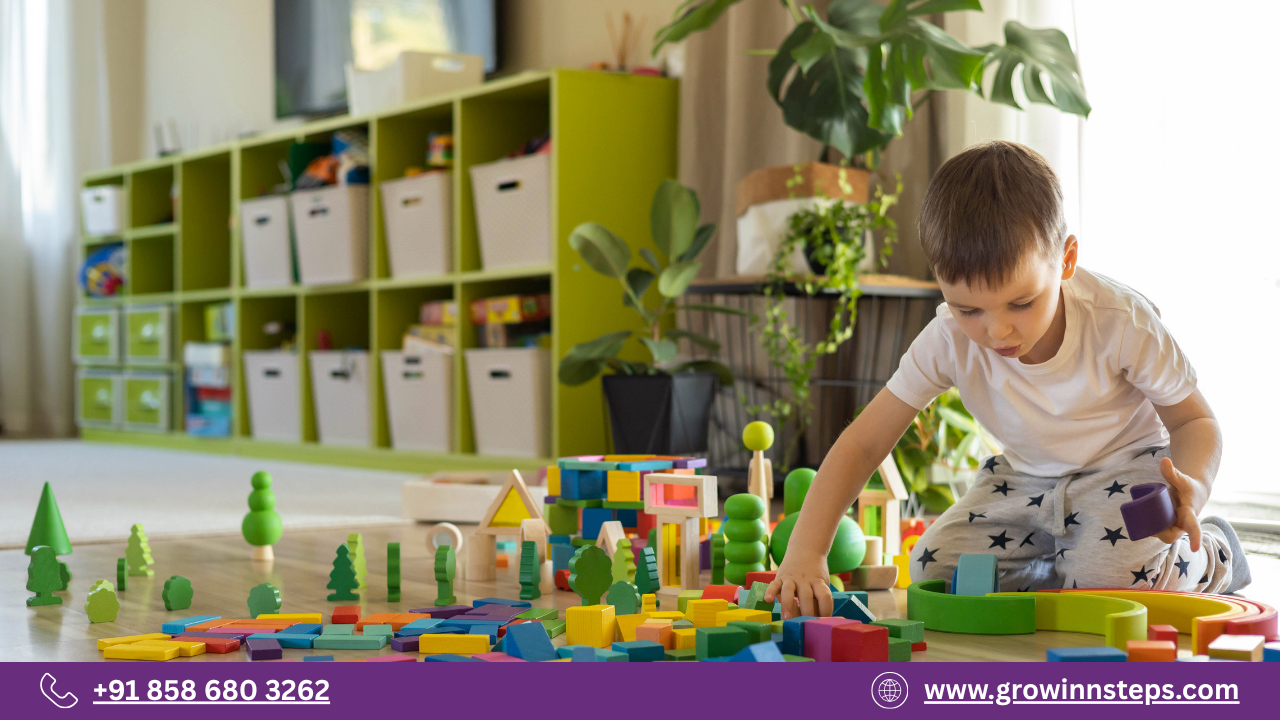
This teaching method recognizes that young children learn best when they are actively involved in meaningful experiences. Whether they are building with blocks, pretending to run a grocery store, painting, singing, or playing outdoor games, every activity is designed to support cognitive, social, emotional, and physical development.
The Play-way Method is widely used in preschools and kindergartens because it makes learning enjoyable while helping children develop confidence, creativity, and a lifelong love for learning.
Understanding Play-based Learning
Play-based learning combines purposeful educational goals with activities that children naturally enjoy. Teachers carefully plan games, storytelling sessions, puzzles, role-play, music, and sensory activities that introduce concepts like numbers, letters, colors, science, and problem-solving.
Unlike free play alone, play-based learning has clear learning objectives. Teachers observe children’s interests, ask open-ended questions, and guide them toward discovering new ideas independently.
For example:
- Building towers with blocks teaches balance, counting, and spatial awareness.
- Pretend cooking introduces language, sequencing, and social interaction.
- Nature walks encourage observation, curiosity, and early science skills.
- Storytelling and puppet play improve vocabulary and listening comprehension.
This approach helps children become active learners rather than passive recipients of information.
Core Principles
The Play-way Method is built on several important principles that support holistic child development:
- Learning through experience: Children understand concepts better by doing rather than simply listening.
- Child-centered learning: Activities are designed around children’s interests, developmental stage, and individual learning pace.
- Active participation: Children explore, ask questions, experiment, and solve problems independently.
- Learning without pressure: The focus is on curiosity, creativity, and enjoyment instead of tests or rote memorization.
- Social interaction: Group play encourages communication, teamwork, empathy, and cooperation.
- Holistic development: Equal importance is given to cognitive, emotional, physical, language, and social growth.
These principles create a positive learning environment where children feel safe, confident, and motivated to explore.
Typical Classroom Activities
A Play-way classroom is vibrant, interactive, and filled with opportunities for hands-on learning. Instead of spending long periods sitting at desks, children participate in a variety of engaging activities such as:
- Storytelling and picture-book reading
- Role-playing and dramatic play
- Building with blocks and construction toys
- Arts and crafts projects
- Music, singing, and dance sessions
- Outdoor games and physical activities
- Sensory play with sand, water, clay, or playdough
- Puzzle-solving and matching games
- Science exploration and simple experiments
- Circle time discussions and group activities
Teachers observe children’s progress during these activities and provide gentle guidance to extend learning naturally.
Skills Children Develop
The Play-way Method supports the development of a wide range of essential life skills that prepare children for future academic success and everyday challenges.
Cognitive Skills
- Problem-solving
- Critical thinking
- Memory
- Early math concepts
- Observation and reasoning
Language and Communication Skills
- Vocabulary development
- Listening comprehension
- Speaking confidently
- Storytelling
- Expressing thoughts and emotions
Social and Emotional Skills
- Sharing and cooperation
- Teamwork
- Empathy
- Emotional regulation
- Self-confidence
Physical Skills
- Fine motor skills through drawing, cutting, and crafts
- Gross motor skills through running, climbing, jumping, and dancing
- Hand-eye coordination
- Balance and body control
Creative Skills
- Imagination
- Artistic expression
- Innovation
- Independent thinking
By encouraging children to learn through exploration and meaningful experiences, the Play-way Method nurtures well-rounded individuals who are curious, resilient, and eager to learn. It lays a strong foundation not only for school readiness but also for lifelong learning and personal growth.
Montessori vs Play-way: Key Differences
| Aspect | Montessori | Play-way |
| Teaching Philosophy | Based on self-directed learning where children choose activities according to their interests and learn at their own pace. | Focuses on learning through games, storytelling, music, role-play, and hands-on activities to make education enjoyable. |
| Classroom Environment | Calm, structured, and carefully organized with designated learning areas and child-sized furniture. | Bright, colorful, flexible, and activity-based, encouraging movement, interaction, and group participation. |
| Teacher’s Role | Acts as a guide or facilitator, observing children and introducing materials when appropriate. | Plays an active role by leading activities, encouraging participation, and facilitating group learning experiences. |
| Learning Materials | Uses specialized Montessori materials designed to teach specific concepts through hands-on exploration and self-correction. | Utilizes toys, puzzles, blocks, art supplies, musical instruments, and everyday objects for playful learning. |
| Curriculum Structure | Follows a sequential curriculum where concepts build progressively, allowing children to master skills independently. | Offers a flexible curriculum that adapts activities to children’s interests, developmental stages, and classroom dynamics. |
| Child Independence | Places strong emphasis on independence, responsibility, decision-making, and practical life skills from an early age. | Encourages independence while balancing it with collaborative play, teamwork, and guided activities. |
| Creativity and Imagination | Creativity develops through purposeful exploration, practical tasks, and open-ended learning materials, with less emphasis on fantasy play. | Strongly encourages imaginative play, storytelling, pretend games, drama, music, and creative expression. |
| Academic Readiness | Introduces literacy, numeracy, science, and practical life concepts naturally through self-paced, hands-on learning. | Builds foundational academic skills through playful activities, songs, games, and experiential learning rather than formal instruction. |
| Assessment Methods | Relies on continuous observation, progress tracking, and individualized feedback instead of frequent tests. | Assesses development through classroom participation, activity outcomes, observations, and overall social and cognitive growth. |
| Classroom Discipline | Encourages self-discipline by helping children understand responsibility, routines, and respect for others. | Maintains discipline through positive reinforcement, engaging activities, clear classroom rules, and cooperative learning. |
Montessori vs Play-way Comparison Table
| Montessori | Play-way |
| Self-directed learning | Learning through play |
| Individual learning pace | Group-based activities |
| Teacher as a guide | Teacher as an active facilitator |
| Specialized learning materials | Toys, games, stories, and creative activities |
| Strong focus on independence | Strong focus on creativity and social development |
| Structured learning environment | Flexible and playful learning environment |
Benefits of Montessori Education
Encourages Independence
One of the greatest benefits of Montessori education is that it encourages children to become independent from an early age. Classrooms are designed with child-sized furniture and easily accessible learning materials, allowing children to choose activities, complete tasks on their own, and take responsibility for their learning. This approach helps build confidence, decision-making skills, and self-reliance that benefit children throughout their lives.
Improves Concentration
Montessori classrooms provide a calm, distraction-free environment where children can focus on one activity at a time. Since students are free to work at their own pace without unnecessary interruptions, they naturally develop longer attention spans and better concentration. These focus skills support academic success and improve problem-solving abilities as children grow.
Builds Practical Life Skills
Practical life activities are a core part of the Montessori curriculum. Children learn everyday skills such as pouring water, buttoning clothes, cleaning up, preparing snacks, organizing materials, and caring for plants. These hands-on experiences improve fine motor skills, coordination, responsibility, and confidence while teaching children valuable life skills they can use at home and in school.
Develops Self-Discipline
Rather than relying on rewards or punishments, Montessori education encourages children to develop self-discipline through freedom with responsibility. Students learn to respect classroom rules, manage their time, complete tasks, and consider the needs of others. Over time, they develop intrinsic motivation, emotional regulation, and a strong sense of accountability.
Supports Individual Learning Pace
Every child learns differently, and Montessori education recognizes these individual differences. Instead of expecting all students to progress at the same speed, children are encouraged to master concepts before moving to the next level. This personalized approach reduces learning pressure, builds confidence, and ensures that each child develops a strong understanding of new skills and concepts according to their unique abilities and interests.
Benefits of Play-way Education
Makes Learning Fun
Play-way education transforms learning into an enjoyable experience by using games, storytelling, music, art, and hands-on activities. Instead of memorizing facts, children learn naturally while playing, making them more enthusiastic about attending school and participating in classroom activities. This positive learning environment helps build a lifelong love for education.
Enhances Creativity
Creative thinking is a core part of the play-way approach. Activities such as drawing, pretend play, building blocks, role-playing, and craft projects encourage children to use their imagination and explore new ideas. These experiences help develop problem-solving skills, innovation, and confidence in expressing themselves.
Improves Social Skills
Play-based learning provides children with regular opportunities to interact with classmates. Through group games, collaborative projects, and shared activities, they learn important social skills such as teamwork, sharing, taking turns, respecting others, and resolving conflicts. These skills form the foundation for healthy relationships both inside and outside the classroom.
Encourages Communication
Children naturally improve their language and communication skills through conversations, storytelling, singing, and role-playing activities. The play-way method encourages them to ask questions, express their thoughts, listen to others, and build confidence in speaking. These experiences support vocabulary development and strengthen both verbal and non-verbal communication.
Reduces Learning Pressure
Unlike traditional teaching methods that may focus heavily on tests and memorization, play-way education creates a relaxed and supportive learning environment. This reduces stress, increases confidence, and helps them develop a positive attitude toward learning from an early age.
Which Method Is Better for Your Child?
There is no single “best” preschool method for every child. Both Montessori and Play-way education have unique strengths, and the right choice depends on your child’s personality, learning preferences, developmental needs, and your family’s expectations. Instead of focusing only on the teaching label, look for an environment where your child feels safe, engaged, and excited to learn.
Consider Your Child’s Personality
Every child has a different temperament. Some children enjoy working independently, while others thrive in energetic, group-based activities.
- Montessori may be a better fit if your child:
- Enjoys independent play
- Can focus on activities for longer periods
- Likes routines and structured environments
- Prefers exploring at their own pace
- Play-way may be ideal if your child:
- Is highly energetic and playful
- Loves imaginative games and storytelling
- Learns best through movement and interaction
- Enjoys participating in group activities
Choosing a method that complements your child’s natural personality can make the learning experience more enjoyable and effective.
Learning Style
Children absorb information in different ways. Understanding how your child learns can help you select the most suitable preschool approach.
- Montessori emphasizes hands-on learning with specially designed materials that encourage children to discover concepts independently. It is ideal for children who enjoy problem-solving and self-directed exploration.
- Play-way focuses on learning through games, music, art, role-play, and creative activities. It benefits children who learn best through active participation and experiential learning.
Neither learning style is superior—they simply support different ways of learning.
Social Needs
Preschool is about more than academics; it’s also where children develop social and emotional skills.
If your child needs more opportunities to interact with peers, cooperate in teams, and build confidence in social situations, a Play-way classroom often provides frequent collaborative activities and group games.
If your child is naturally shy or becomes overwhelmed in busy environments, a Montessori classroom may offer a calmer setting where they can gradually build confidence while still participating in social learning.
The goal is to choose an environment where your child can develop healthy relationships while feeling comfortable and secure.
Family Expectations
Your family’s educational goals should also influence your decision.
Consider asking yourself:
- Do you value independence and self-discipline from an early age?
- Are you looking for a structured educational foundation?
- Do you want your child to experience creative, play-based learning?
- Is your priority emotional development, academic readiness, or a balanced combination of both?
Montessori often appeals to families seeking structured, child-led learning with a focus on independence, while Play-way is popular among parents who prioritize creativity, enjoyment, and holistic early childhood development.
School Quality Matters More Than the Label
The teaching method is only one part of your child’s preschool experience. A well-managed school with caring teachers can have a far greater impact than the curriculum name alone.
When evaluating preschools, pay attention to:
- Qualified, experienced, and compassionate teachers
- Safe, clean, and child-friendly classrooms
- Low teacher-to-child ratios
- Opportunities for hands-on learning
- Open communication with parents
- Positive reviews and recommendations
- A nurturing environment where children feel valued
A high-quality preschool that genuinely understands children’s developmental needs will help your child thrive, whether it follows the Montessori method, the Play-way approach, or a blend of both. Ultimately, the best school is one where your child feels happy, confident, curious, and eager to learn every day.
Factors to Consider Before Choosing a Preschool
Selecting the right preschool goes beyond choosing a well-known name or a popular teaching method. A high-quality preschool provides a safe, nurturing, and engaging environment where children can develop academically, socially, and emotionally. Before making your decision, evaluate these essential factors.
Teacher Qualifications
Teachers play the most important role in shaping a child’s early learning experience. Look for educators who have formal training in Early Childhood Education (ECE) and experience working with preschool-aged children. Qualified teachers understand child development, use age-appropriate teaching strategies, and know how to encourage curiosity, confidence, and independence.
During your school visit, observe how teachers interact with children. Warm, patient, and responsive educators often create the most positive learning environments.
Student–Teacher Ratio
The number of children assigned to each teacher significantly impacts the quality of education and care. Smaller class sizes allow teachers to provide individual attention, identify each child’s strengths and challenges, and ensure every child feels included.
A lower student–teacher ratio also improves classroom management, safety, and communication between teachers and families.
Safety and Hygiene
Your child’s safety should always be a top priority. Evaluate whether the preschool has secure entry systems, CCTV surveillance (where appropriate), emergency procedures, first-aid facilities, and trained staff.
Hygiene is equally important. Clean classrooms, sanitized toys, child-friendly washrooms, proper handwashing practices, and regular cleaning routines help reduce the spread of illnesses and create a healthier learning environment.
Classroom Environment
A preschool classroom should be welcoming, organized, and designed for young learners. Look for bright, spacious rooms with age-appropriate furniture, educational materials, reading corners, creative play areas, and plenty of opportunities for hands-on learning.
Children learn best when they feel comfortable and inspired. A well-designed classroom encourages exploration, creativity, collaboration, and independent thinking.
Parent Reviews
Talking to current or former parents can provide valuable insights that brochures and websites often cannot. Read online reviews, ask for recommendations, and, if possible, speak directly with parents about their experiences.
Pay attention to consistent feedback regarding teacher communication, child development, school management, safety, and overall satisfaction. While no school will have perfect reviews, recurring positive comments are a good indicator of quality.
Curriculum Balance
An effective preschool curriculum balances academics with play, creativity, physical activity, and social-emotional learning. Young children benefit most from programs that combine structured learning with opportunities for exploration, storytelling, music, art, outdoor play, and hands-on activities.
Avoid programs that focus excessively on worksheets or academic pressure. Instead, choose a preschool that supports holistic development by nurturing cognitive, emotional, physical, language, and social skills together.
Common Myths About Montessori and Play-way
· Montessori Is Only for Gifted Children
Montessori education is designed for children of all abilities, learning styles, and developmental stages. The approach focuses on individualized learning, allowing every child to progress at a pace that suits their unique strengths and needs. Whether a child needs extra support or additional challenges, the Montessori method can adapt accordingly.
· Play-way Means Children Only Play
Many parents assume that Play-way education is simply unstructured play with little learning involved. In reality, every activity in a quality Play-way classroom is carefully planned with specific learning objectives. Through games, storytelling, music, role-playing, art, and hands-on activities, children develop language, math, social, emotional, and problem-solving skills while enjoying the learning process.
· Montessori Has No Creativity
Some people believe Montessori classrooms limit imagination because they use structured learning materials. While Montessori emphasizes real-world experiences and purposeful activities, creativity is encouraged in many ways. Children express themselves through art, music, storytelling, open-ended projects, movement, and creative problem-solving. The method nurtures independent thinking, which is a key foundation for creativity.
· Play-way Lacks Academics
Another myth is that Play-way education focuses only on fun and ignores academic development. In fact, Play-way learning introduces essential concepts such as early literacy, numeracy, science, and critical thinking through engaging activities. Children often learn academic skills more effectively because they actively participate instead of memorizing information.
· One Method Is Always Better Than the Other
There is no universally “best” preschool method. Montessori and Play-way each have unique strengths and can both provide excellent early childhood education when implemented well. The right choice depends on your child’s personality, learning style, developmental needs, and the quality of the preschool. A supportive environment, experienced teachers, and a balanced curriculum often have a greater impact on a child’s success than the teaching method alone.
Frequently Asked Questions
Which is better, Montessori or Play-way?
Neither method is universally better. The right choice depends on your child’s personality, learning style, and developmental needs. Montessori is ideal for children who enjoy independent, self-paced learning, while the Play-way approach is well-suited for children who learn best through imaginative play, group activities, and hands-on exploration.
What is the main difference between Montessori and Play-way?
The biggest difference lies in the teaching approach. Montessori uses structured, self-directed learning with specially designed educational materials that encourage independence and concentration. Play-way learning focuses on teaching through games, storytelling, music, role-play, and creative activities, making learning enjoyable and interactive.
Is Montessori more expensive than Play-way?
In many cases, yes. Montessori schools often have higher fees because they require certified Montessori teachers, specialized learning materials, and carefully prepared classroom environments. However, fees vary depending on the school’s location, facilities, curriculum, and reputation, so it’s best to compare individual schools rather than assuming all Montessori programs cost more.
Can children transition from Play-way to Montessori?
Yes. Most children adapt successfully from a Play-way preschool to a Montessori classroom, especially when the transition is gradual and supported by parents and teachers. Although Montessori encourages more independent work and structured routines, young children are generally capable of adjusting with proper guidance.
Which method is best for shy children?
Both approaches can benefit shy children in different ways. Montessori provides a calm, predictable environment that allows children to build confidence through independent activities without constant group participation. Play-way classrooms, on the other hand, encourage social interaction through collaborative games and role-play, helping shy children gradually become more comfortable with peers. The best choice depends on your child’s comfort level and personality.
At what age should my child join Montessori or Play-way preschool?
Most children begin preschool between 2.5 and 4 years of age. Montessori programs often accept children from around 2.5 or 3 years, while Play-way preschools may welcome children as young as 2 years, depending on the school’s admission policy. Instead of focusing only on age, consider whether your child is emotionally, socially, and physically ready to participate in a preschool environment.
Final Thoughts
Choosing between Montessori and Play-way education ultimately comes down to understanding your child’s unique personality, learning style, and developmental needs. Montessori focuses on self-directed learning, independence, and structured exploration, while the Play-way approach encourages learning through play, creativity, social interaction, and hands-on experiences. Both methods provide valuable early learning opportunities, but they differ in how children are guided and engaged throughout the day.
There is no single preschool approach that is universally better than the other. A method that works exceptionally well for one child may not be the best fit for another. Every child learns at a different pace, and the ideal environment is one where they feel safe, confident, curious, and motivated to learn.
Before making your decision, take the time to visit prospective schools, observe classroom activities, ask about the curriculum, and speak with teachers about their teaching philosophy. Seeing children and educators interact firsthand can provide valuable insights that brochures and websites cannot.
The best preschool is one that supports your child’s emotional, social, cognitive, and physical development while also reflecting your family’s values and educational goals. When children learn in an environment where they feel happy, respected, and encouraged to explore, they build a strong foundation for lifelong learning and future academic success.
